Scoop.it

PBOC Official: China’s Digital Yuan Won’t Be a Speculative Currency Like Bitcoin

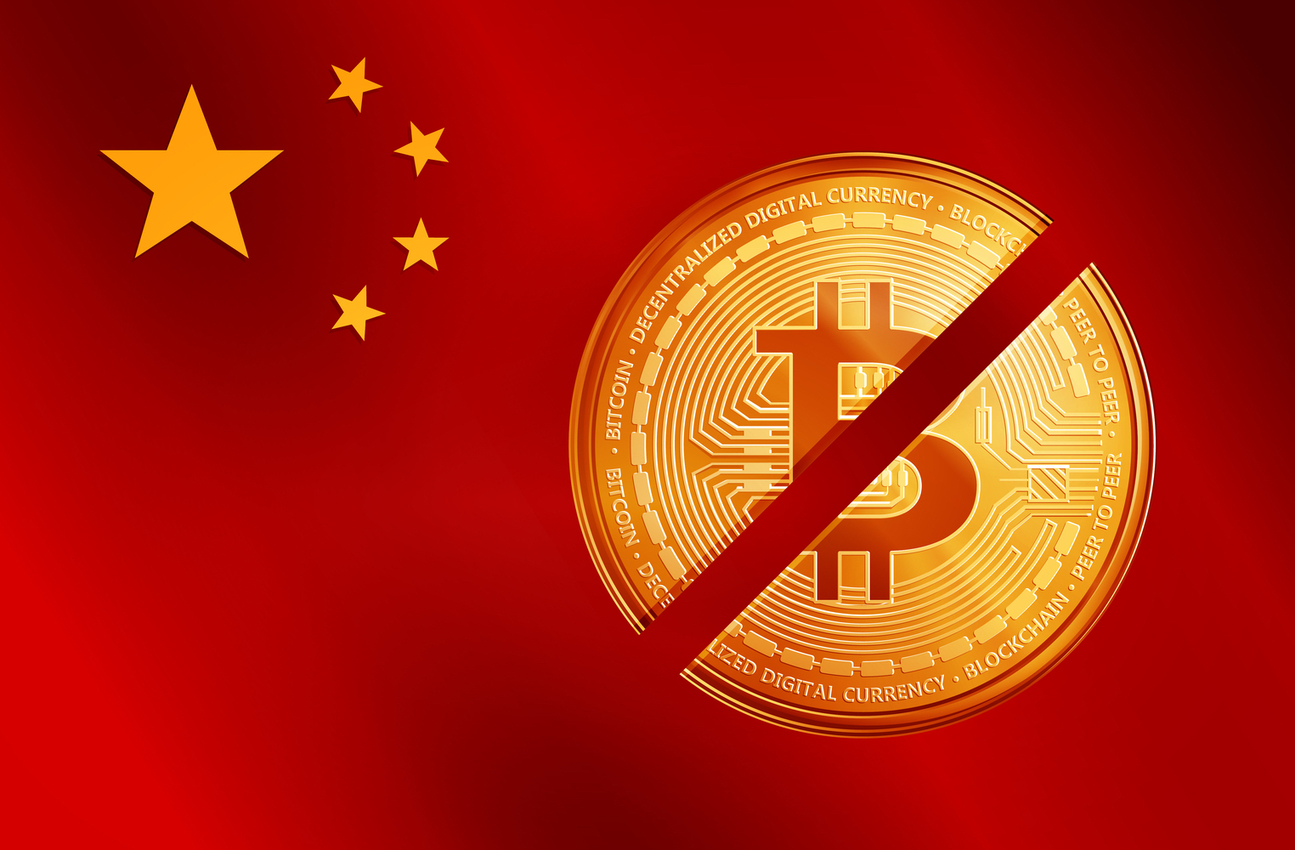
Not Bitcoin, Not SpeculativeHead of the PBOC Digital Currency Research Institute, Changchun stated Saturday at a financial meeting in Beijing that “The digital yuan is used to spend, not for speculation. It does not have the characteristics of bitcoin speculation, nor does it require a basket of assets to support its value like stablecoins,” reported Shanghai Securities News.The media outlet details that Changchun affirmed the digital yuan would not be a crypto asset like bitcoin or a type of stablecoin as being proposed by Libra.Preparations ‘Basically Completed’The report quotes Changchun as saying:At present, the digital currency DCEP [Digital Currency Electronic Payment project] of the People’s Bank of China has basically completed the top-level design, standard formulation, functional research and development, joint debugging and testing.The next step is to begin rolling out pilot programs for the currency, though no specific timeframe has been given. When this is complete, the projected plan is to issue the currency to commercial banks which would then disperse the CBDC to the public.

By |2019-12-23T18:09:42+00:00December 23rd, 2019|Scoop.it|0 Comments

Paiement mobile : comment les chinois AliPay et WeChat Pay se sont imposés à Paris

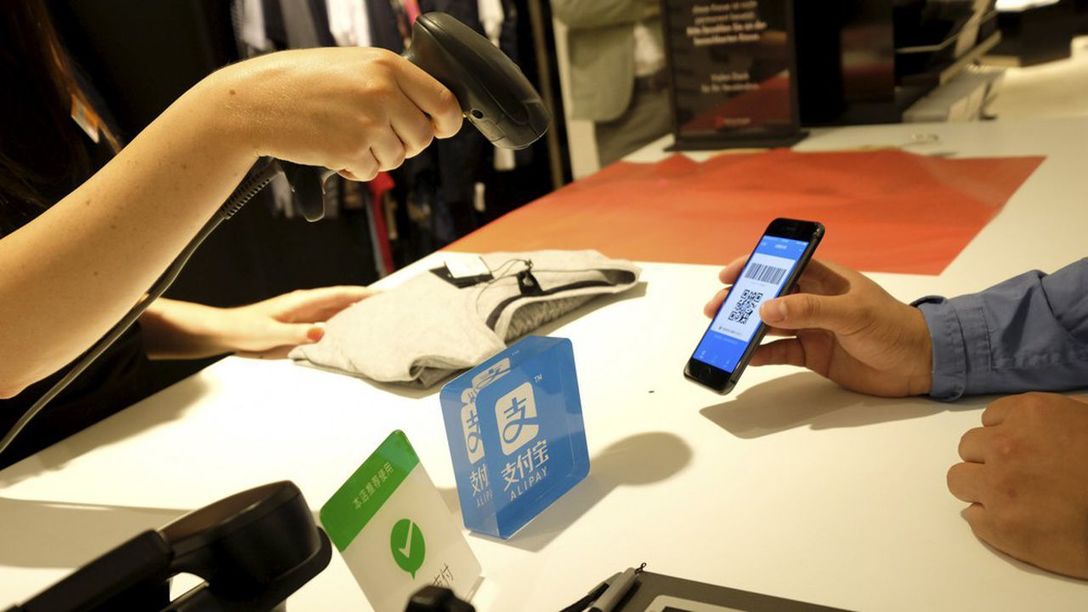
La France, premier marché en EuropeEn trois ans, le logo bleu d'Alipay, filiale d'AntFinancial, le bras armé d'Alibaba, a essaimé dans la capitale. BHV, Sephora, Marionnaud… Le groupe revendique aujourd'hui plusieurs milliers de partenaires. « La France est notre premier marché en Europe », souligne Alice Zhan, directrice du développement européen de la filiale du géant chinois de l'e-commerce Alibaba.Et Alipay n'est pas seul. Son compatriote WeChat Pay, qui appartient à un autre géant chinois, Tencent, a lui aussi tissé sa toile dans la capitale française pour capter les plus de 4 milliards d'euros dépensés chaque année par les touristes chinois, selon la Banque de France (chiffres de 2018).Les deux « super applications » ne sont pas des portefeuilles numériques comme les autres. Pour les utiliser, il faut un numéro de téléphone chinois, un compte bancaire chinois… Et elles fonctionnent avec des QR Code. Au moment du paiement, ils sont scannés à la caisse, comme un code-barres.

By |2019-12-23T18:08:41+00:00December 23rd, 2019|Scoop.it|0 Comments

France Approves First ICO

ICO Regulation in FranceThe new regime introduced by the Pacte law “is intended to promote the development of ICOs,” the AMF detailed, adding that it only applies to the issue of utility tokens and does not apply to Security Token Offerings (STOs).An issuer wanting to carry out an ICO may apply for approval from the AMF and meet a number of criteria. Firstly, it must be incorporated as a legal entity established or registered in France. Secondly, its whitepaper must be drawn up in accordance with Article 712-2 of the AMF General Regulation and with AMF Instruction DOC-2019-06.A procedure to monitor and safeguard the funds raised by the ICO must be implemented and a system to ensure compliance with its anti-money laundering and financing of terrorism obligations must be put in place. The AMF emphasized:Although this approval is optional and ICOs without AMF approval will therefore continue to be legal, only those public offerings that have received the AMF approval may be marketed directly to the public in France.

By |2019-12-23T18:07:18+00:00December 23rd, 2019|Scoop.it|0 Comments

Facebook : les noms et numéros de téléphone de 267 millions d’utilisateurs exposés

Un peu plus, un peu moins, on ne va pas chipoter : une fois encore, Facebook a fait preuve d'une légèreté coupable, ce qui a permis à une base de données de trainer sur les internets interlopes. Les noms, numéros de téléphone et identifiants (mais pas les mots de passe) de 267 millions de comptes d'utilisateurs Facebook ont été accessibles en clair pendant deux bonnes semaines. La base de données a été indexée le 4 décembre, le 12 elle a été postée sur un forum de hackers, et le 19 son accès a été supprimé.Selon le chercheur en sécurité Bob Diachenko, ce coffre aux trésors ouvert à tous les vents est le résultat de malandrins basés au Vietnam. Leur modus operandi n'est pas très clair, mais il est possible que ces données aient été siphonnées via l'API Facebook avant que le réseau social ne resserre les boulons l'an dernier.Ces informations, qui concernent surtout des utilisateurs américains, permettent d'organiser des campagnes de spam et d'hameçonnage à grande échelle, notamment via SMS. Pour éviter de subir de telles attaques, il faut prendre son courage à deux mains et plonger dans les paramètres de confidentialité de son compte Facebook pour réduire la portée des publications à ses seuls amis. Veillez aussi à modifier le réglage pour refuser que les moteurs de recherche (en dehors de Facebook) puissent afficher votre profil.

By |2019-12-21T18:08:39+00:00December 21st, 2019|Scoop.it|0 Comments

Maduro Plans to Airdrop Petro to Municipal Leaders and Eligible Citizens

Venezuelan President Aggressively Pushes for Petro AdoptionThe United Socialist Party leader and Venezuelan president Nicolás Maduro has been marketing the country’s cryptocurrency, the petro (PTR), aggressively recently. In November, Maduro told the public that PTR needs to be just as usable as physical currencies. “The usability is very important, so we can distribute the petro,” Maduro explained at the time. The Venezuelan head of state noted that there are citizens who don’t have a phone, but emphasized that “usability can be done with a card.” Maduro continued by saying that just like the 18 million Venezuelans with the Carnet de la Patria (Homeland card), a card for PTR can be created. The Homeland card is a Venezuelan identity card that leverages a QR code and a digital wallet. Maduro’s announcement further stressed:We can give debit cards with petro, that is, build a solid monetary system and boost the usability of the Venezuelan cryptocurrency.Sunacrip Notice 19 and 20 discuss Maduro’s push for petro (PTR) usability and adoption, while the notices also notify the public of the approval of 30 million barrels of crude oil to back the cryptocurrency.The Venezuelan leader went on to say that the state’s electronic payment system will help the country “seek a definitive exit to the economic war.” Maduro remarked that thousands of Venezuelan merchants will be onboarded by next year and the state’s digital currency system is “taking the right steps to consolidate the economy.” The usability news from the president followed his decision to approve a total of 30 million barrels of crude oil and petroleum products to Sunacrip. The 30 million barrels of oil backing the PTR is much smaller than the promised five billion barrels of oil the Venezuelan government initially pledged to leverage.

By |2019-12-16T22:21:38+00:00December 16th, 2019|Scoop.it|0 Comments

German Banks Increasingly Charging Retail Clients Negative Interest Rates

More Banks Charge Negative Rates From First EuroGerman banks are increasingly passing on the burden of negative interest rates to their retail clients from the very first euro deposited into their accounts. While it is not uncommon for banks in Germany to levy negative interest rates on their customers, most of them have refrained from charging retail clients, largely due to concerns of reputational damage. However, a regional bank close to Munich, Volksbank Raiffeisenbank Fuerstenfeldbruck, made headlines recently when it began charging all new clients -0.5% on their deposits from the first euro deposited. Since then, at least two more banks have followed suit.Another bank, Kreissparkasse Stendal, has a similar policy for clients who have no other relationship with the bank. The bank explains on its website that it is charging a “deposit fee” on balances of 0.01 euro or more. Both Volksbank Raiffeisenbank Fuerstenfeldbruck and Kreissparkasse Stendal “levy the charges on new customers who open a type of savings account that allows for daily, unlimited withdrawals, a popular instrument among German savers,” Bloomberg detailed.

By |2019-12-16T22:20:35+00:00December 16th, 2019|Scoop.it|0 Comments

Coca-Cola brings back the global CMO role

“Over the past several years, we’ve worked hard to create headroom for our brands to grow. We created the frameworks and disciplines to capture it, and our results demonstrate our progress,” says Crespo. “I feel confident that this great company that I love is set for sustained and long-term growth.”Coca-Cola’s last CMO was Marcos de Quinto, who held the position for more than two years. When he retired, the company made the decision to create the CGO role, which added corporate strategy, customer and commercial to the CMO role.Those duties will now be split.Integrated global marketing, which includes creative, category, marketing operations, design, and knowledge and insights, will report into new CMO Manolo Arroyo. He will also keep his role as president of Asia Pacific.Corporate strategy will report into CFO John Murphy, while customer and commercial operations will fall under chief operating officer Brian Smith’s remit.

By |2019-12-16T15:43:33+00:00December 16th, 2019|Scoop.it|0 Comments

Cdiscount réinvente la façon de vendre du vin

La Nouvelle Cave proposera trois types de services :- Un conseil digitalisé. En plus de 3 cavistes experts, un sommelier digital, développé avec Matcha, une start-up spécialisée sur le vin, est à la disposition des clients, permettant de les orienter au mieux vers la bonne bouteille en rayon, grâce à un tout nouveau système de guidage lumineux mis en place avec la société Soixante Circuits.- Un accompagnement pour les néophytes ou avertis : grâce à un système inédit de pastillage des bouteilles, les clients ont accès à une clef de lecture simple pour trouver et retrouver la bonne bouteille, celle qui correspond à ses goûts ou à l’utilisation désirée. « Nous sommes partis du postulat que chez les commerçants spécialisés aucun conseil ni indication n’est fourni, si ce n’est la provenance, or chaque client est unique et il faut donc lui apporter une réponse dédiée unique », explique Laurent Lacluque.- Une personnalisation de l’offre : seules les bouteilles les mieux notées et les plus vendues sur Cdiscount et sur le bassin parisien sont proposées en magasin, réactualisées en temps réel grâce à des étiquettes électroniques- Un accès à une offre augmentée : la tablette tactile installée au centre du magasin permet aux futurs shoppers d’avoir accès à plus de 7000 références en livraison gratuite à domicile. Le dispositif est également activable sur smartphone via un QR Code.- Plus de services : des masterclasses d’œnologie et de mixologie animées par des vignerons et des bartenders, la possibilité de tester avant d’acheter, de fabriquer de la bière sur place, de refroidir instantanément toute bouteille achetée pour une consommation immédiate…« Et nous allons encore plus loin, ajoute Laurent Lacluque, nous sommes convaincus du pouvoir de prescription des clients, nous avons donc voulu leur redonner ce pouvoir. Au travers de leurs notes, commentaires sur chaque bouteille et participations aux ateliers, ils contribueront à l’animation et l’amélioration du lieu et de l’offre au fil du temps ».Pour l’instant d'autres boutiques ne sont pas encore prévues, mais l’ambition est clairement affichée : si ça marche, d’autres Nouvelle Cave verront le jour. A court terme des synergies auront lieu avec les autres entités du groupe, comme par exemple « apporter des solutions pour repenser les rayons vins des enseignes appartenant à Casino ».

By |2019-12-16T08:22:32+00:00December 16th, 2019|Scoop.it|0 Comments

Bordeaux : la filière numérique en quête de talents et de sens – Sud Ouest.fr

Recruter, c’est « la » préoccupation majeure aujourd’hui de toutes les entreprises du numérique dans la métropole bordelaise. Jeudi après-midi, le Job Connect était l’un des temps forts du French Tech Day, qui réunit chaque année l’écosystème. Pas moins de cent entreprises (Dolist, FieldBox.ai…) proposaient ensemble 380 emplois. Dont 300 en CDI.

By |2019-12-13T14:28:25+00:00December 13th, 2019|Scoop.it|0 Comments

Saga launches SGA token to rival Facebook’s libra cryptocurrency

One blockchain company thinks it has an alternative to Facebook’s digital currency proposal.With an advisory board that includes top economists like Nobel Prize-winner Myron Scholes, U.K.-based firm Saga hopes to introduce a global currency that regulators find agreeable.The company on Tuesday launched its saga (SGA) token, a virtual currency tied to a basket of currencies in order to maintain a stable value. That’s not too dissimilar to Facebook’s libra, which was met with a barrage of regulatory opposition moments after being announced. But one key thing that sets it apart from that project is what Saga bases the currency’s value on.

By |2019-12-13T11:14:09+00:00December 13th, 2019|Scoop.it|0 Comments