Scoop.it

Why Robots Should Learn to Build Crappy Ikea Furniture | WIRED

It’s become a veritable rite of passage for humans settling into their first apartments: assembling a piece of Ikea furniture from a cryptic set of pictures without having either you, or the item in question, fall apart.What better way, thought researchers at the University of Southern California, to torture-teach robots to manipulate the world around them. Following in the footsteps of researchers who last year got robot arms to assemble those classic Stefan chairs (roboticists love Ikea), they’re gifting the robotics community with a new simulator to train robots to put together low-budget Swedish furniture. Ultimately, they hope machines will begin to approach our own dexterity and adaptability to novel objects. Ladies and gentlemen and robots, grab your Allen wrenches.For you and me, assembling things from Ikea is simultaneously simple and hellish: You lament the process, but your great big brain can (mostly) translate the abstract instructions into something real. You run into all kinds of problems, but your creativity surmounts them with ease; the Allen wrench cramps your hand, but your human powers of manipulation are unparalleled.For a robot, this is all pure horror. Sure, robots have been working on assembly lines for decades, but they’re just the muscle. They lift big pieces like car doors into place, for instance, while humans take care of the fine manipulations, such as screwing in tiny parts. The robots’ environment is highly regimented, so the machines never have to improvise—even if they were smart enough to do so, their unpredictability would put their human coworkers at risk.

By |2019-11-24T22:28:29+00:00November 24th, 2019|Scoop.it|0 Comments

Black Friday : pour défendre une consommation responsable, des marques organisent un boycott du 29 novembre

Le Black Friday - rendez-vous commercial annuel venu des États-Unis puis importé en France en 2013 - propose une consommation massive. Ce 29 novembre est l'incarnation d'un modèle où surproduction et surconsommation s'unissent sous la bénédiction de promotions déraisonnées. Mais c'est sans aucun questionnement sur l’impact sur les hommes et l’environnement.Fête des Célibataires version Alibaba, Prime Day de l'Américain Amazon et Black Friday, le vendredi qui suit la fête de Thanksgiving aux États-Unis... les occassions de frénésies d'achats se multiplient à travers le monde. Mais cette année de nombreuses marques, souvent réunies en collectif, engagent une contre-campagne. Pour elles, la seule réduction qui compte, c'est celle de notre empreinte écologique.

By |2019-11-24T11:14:34+00:00November 24th, 2019|Scoop.it|0 Comments

Ben Davis: In-store retail is finally going digital

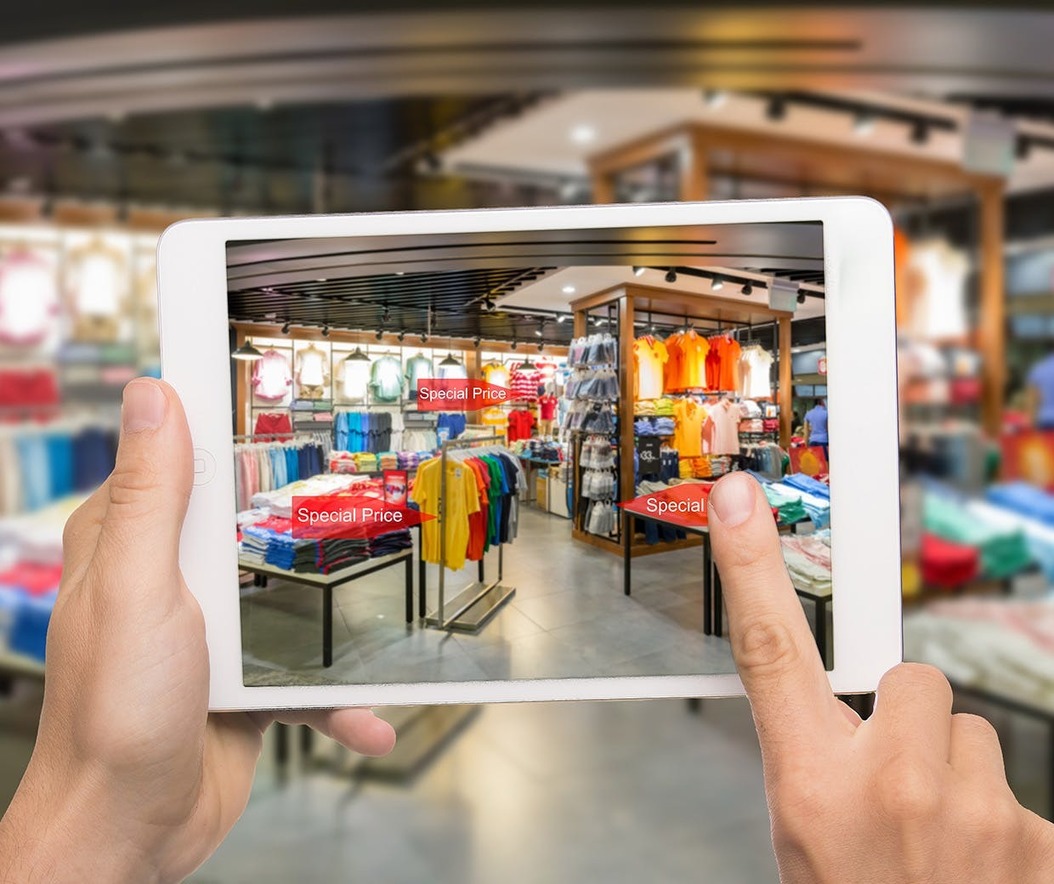
Sainsbury’s, for what it’s worth, simply stated: “Some customers preferred to pay with cash and card, which sometimes meant they were queuing to use the helpdesk, particularly at peak times of day. This is why we’ve added a manned till and two self-checkouts back into the store.”Try to pay with notes or coins in an Amazon Go store and it could take you a while, too. There is speculation the tech giant is currently looking for sites in the UK.In China, however, where the penetration of mobile payment stands at 86%, according to PwC’s Global Con­sumer In­sight Sur­vey 2019, things are moving a little more quickly. There is much excitement about Alibaba’s Freshippo. Yes, you can still go to a helpdesk if you want to pay cash, but the retailer’s commitment to experiential smartphone-assisted retail is impressive.There are reportedly more than 150 stores across 21 Chinese cities. The app allows shoppers to access information about products, add them to their shop, checkout with Alipay and arrange delivery to their home within 30 minutes (if they live nearby), as well as use a number of services in store such as restaurants and Starbucks cafés.

By |2019-11-24T11:14:06+00:00November 24th, 2019|Scoop.it|0 Comments

NPS is where customer insight starts, it’s not marketers ultimate goal

We know it is flawed but NPS is still useful for comparison as everybody else is using it. This has resulted in a cult of NPS, so we are all surrounded by people begging us to “rate our service” online or face-to-face.The strongest selling points of NPS is its simplicity. It is easy for people to understand the goal of having more promoters. And given the obsession with the idea that ‘what gets measured get managed, and what gets managed gets done’, NPS gets pushed to the front of the class.But there are flaws in this thinking, one of which is this: contrary to thepurveyors of ‘brand love’ and ‘brand purpose’, customers are not lying awake at night thinking about your brand. At a more practical level, NPS and CSAT scores do not measure whether your responder is a top customer, a one-off client or, worse still, a person who just likes to rate thing badly.NPS and other measures are being asked to work too hard. It should be a starting point to prompt more insight but today, NPS is seen as the end point.Nor are these scores consistent in the context. Should the question be asked early in a customer’s journey or later? You will get a different result depending on the context. There is really no one number that represents a customer’s experienceAlso, NPS does not tell you why a score is bad, or why it might be improving. There is no diagnosis, which is the starting point of defining strategy, as Mark Ritson rightly points out.Talking to a couple of fellow marketers about NPS really proved to me how deep its adoption is. One service brand’s senior management are bonused on the score, simply because it correlates with one of the company’s key business drivers.I’m not so sure; this particular industry has so many moving parts that ascribing the voice of the customer to NPS is fallacious.When I’ve used NPS, I’ve quickly realised the consumer view of the industry drove perception more than I would have liked. The notion of a consumer making up their mind about a brand or service interaction in a split-second based on an often poorly laid out and inconsistent style means our scores are unreliable. Improving the score becomes a bit of a game, as opposed to a tool to unlock a prediction about what a customer will do in the future.The doyen of marketing measurement and author of Marketing and the Bottom Line, Tim Ambler, speaks to this point in a paper entitled ‘Assessing marketing performance: Don’t settle for a silver metric’ in the Journal of Marketing Management. He agrees marketing performance can and should be evaluated. However, he rails against the idea that there is a single number, financial or otherwise.NPS and other measures are being asked to work too hard. It should be a starting point to prompt more insight but today, NPS is seen as the end point.

By |2019-11-24T11:06:16+00:00November 24th, 2019|Scoop.it|0 Comments

The Cost of Deliveries is exploding.

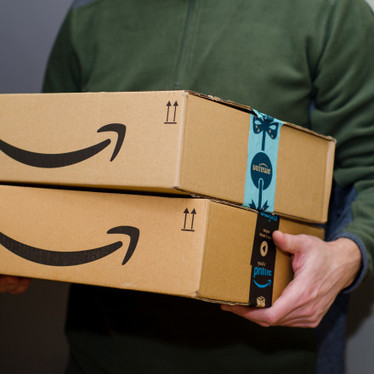
In New York City, daily deliveries have exploded in a single decade from 360,000 to 1.5 million. A scooter delivery service in China dispatched 30 million food orders on one summer weekend. Our lives are easier, but at what cost? Nearly a third of waste in the United States derives from delivery packaging. All that cardboard requires 1 billion trees to manufacture it. And our demand continues to grow, driving Amazon and its competitors to stockpile items they expect you to buy.Is it just the trash? No. Society’s addiction to instant retail gratification is also taxing urban infrastructure, while Amazon annually pumps out 44.4 million tons of carbon dioxide.

By |2019-11-23T18:49:37+00:00November 23rd, 2019|Scoop.it|0 Comments

Maduro Plans to Give Venezuelan Pensioners Petro as Christmas Bonus

Maduro is paying retirees and pensioners with petro, he claimed during a government-sponsored program that the crypto has “27,000 affiliated businesses.” Maduro also explained at the program his bonus plan for pensioners and that he expected merchant adoption to “double in the coming months.” Meanwhile, news.Bitcoin.com was told by local sources that the PoS systems used at affiliate stores only accept cryptos like LTC, BTC, and BNB. Various reports also detail that Venezuela’s central bank has indicated plans to stockpile BTC and other digital assets. Last February Pedro Peroza wrote a number of informative articles concerning the National Superintendency of Crypto Assets and Related Activities (Sunacrip) operations. Peroza said he believes Maduro’s regime has been stockpiling digital currencies via the “collection of taxes in cryptocurrency, for that a Law was approved in the ANC (National Assembly Madurista).”Sunacrip Press reports that the ‘Savings Plan’ in petro celebrated its first year of operation with more than 3 million savings accounts. “A year ago I invited you to save in petros and look how well they did, today I call on all businesses, all entrepreneurs, to join, to look for this new path, and begin to travel the petro’s path, so they can see that they are going to do much better,” President Maduro wrote according to Sunacrip Press on November 6, 2019.During Maduro’s recent speech, the president told attendees that cryptocurrencies and the petro will help Venezuelans battle against the “economic war.” “We have achieved the slowdown of the economic war through the self-regulation of the economy,” Maduro explained to the program guests. “With this self-regulation of the economy, other actors have begun to operate with their own currencies.”

By |2019-11-23T18:49:04+00:00November 23rd, 2019|Scoop.it|0 Comments

En Allemagne, Zalando épinglé par son système de notation digne «des méthodes de la Stasi» – Libération

«C’est une surveillance à 360 degrés. Je n’ai pas le droit de passer une mauvaise journée». «Souriez à tout le monde, tout le temps. Sinon, cela peut vous coûter cher». Sous couvert d’anonymat, ces employés du site berlinois de commerce électronique Zalando racontent comment ils vivent le fait d’être «ranké» en permanence par le logiciel Zonar. Ce système d’évaluation des salariés par leurs propres collègues a été mis en place par l’entreprise sur 5 000 de ses 14 000 employés.Deux chercheurs de l’université Humboldt, à Berlin, Philipp Staab et Sascha-Christopher Geschke, ont étudié le fonctionnement de Zonar pendant deux ans. Leurs conclusions, publiées dans un rapport de la fondation Hans Böckler – proches des syndicats –, sont dignes d’un épisode de Black Mirror. «Il s’agit essentiellement d’évaluer, de contrôler et de sanctionner en permanence les employés à l’aide des technologies numériques modernes», estiment-ils. L’entreprise crée «de la surveillance, de la pression et du stress». Ils ajoutent, évoquant un concept cher à Michel Foucault dans Surveiller et punir : «Zonar représente un système très complet, quasi panoptique, de contrôle des performances.»

By |2019-11-23T18:48:31+00:00November 23rd, 2019|Scoop.it|0 Comments

Pourquoi les marques silencieuses vont mourir

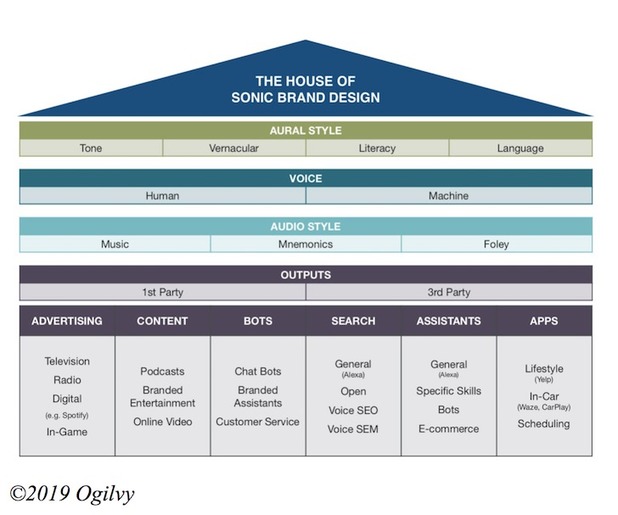
Le branding audio a progressivement repris de l'importance pour une raison principale : la vitesse. Plus la peine de diffuser systématiquement des spots de trente secondes pour faire passer un message ou installer une marque, les formats courts sont privilégiés et c'est là où la force de l'audio est révélée, en capturant l'attention et permettant la mémorisation plus rapidement que tout autre canal. Le son a en effet l'incroyable faculté de déclencher des souvenirs et des émotions, provoquant à chaque répétition un réflexe quasi pavlovien comme pourrait le faire le jingle Intel ou le son d'ouverture d'un Mac. D'où le grand come-back des podcasts et autres snacking contents.  Les marques doivent donc manier le sujet de l'audio comme celui de la communication, de l’identité, du marketing ou du design, et l’intégrer comme un puissant levier d’émergence et d’adhésion pour les années à venir.  

By |2019-11-23T18:48:20+00:00November 23rd, 2019|Scoop.it|0 Comments

Le gouvernement et l’Arcep lancent enfin la 5G

La 5G, c'est enfin parti ! Quatre mois après avoir dessiné cet été les premiers contours du  système d'enchères « hybride » censé répartir les 310 MHz de spectre indispensables aux quatre opérateurs pour pouvoir lancer le nouveau standard de téléphonie mobile, l'Arcep, le régulateur des télécoms, a publié jeudi soir les paramètres définitifs du processus d'attribution et les a transmis au gouvernement.Pour Orange, SFR, Bouygues Telecom et Free, ainsi que pour les équipementiers comme Huawei, Nokia et Ericsson, c'est un énorme ouf de soulagement. « Nous sommes satisfaits de voir que le processus avance » estime la Fédération française des télécoms (FFT).

By |2019-11-23T18:48:04+00:00November 23rd, 2019|Scoop.it|0 Comments

TV the ‘least risky’ form of advertising, finds new research

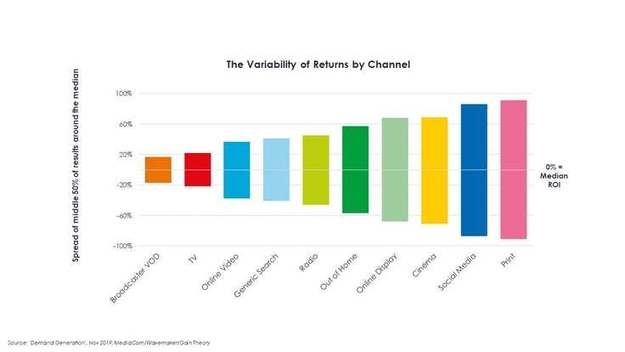
While the research has been commissioned by TV advertising body Thinkbox, it is based on econometric analysis of £1.4bn in media spend by 50 brands across 10 forms of advertising over three years. The aim is to offer brands practical advice if they don’t have access to econometric analysis across six categories – FMCG, finance, retail, online retail, automotive and travel.The research also finds that TV has the highest ‘multiplier effect’ across other channels, boosting all other channels by at least 20% and the only media platform to do this. For example, TV advertising can boost performance in cinema by up to 54%; print, radio, online display and social media by 31%; and direct mail, online video, video-on-demand and outdoor by up to 22%.The next highest is print, which can boost cinema advertising by up to 13% but only improves other media by up to 8%. The average multiplier effect across all channels is 8%.

By |2019-11-23T18:47:40+00:00November 23rd, 2019|Scoop.it|0 Comments