Scoop.it

Dubai Launching Crypto Valley in Tax-Free Zone – No Personal or Corporate Income Tax

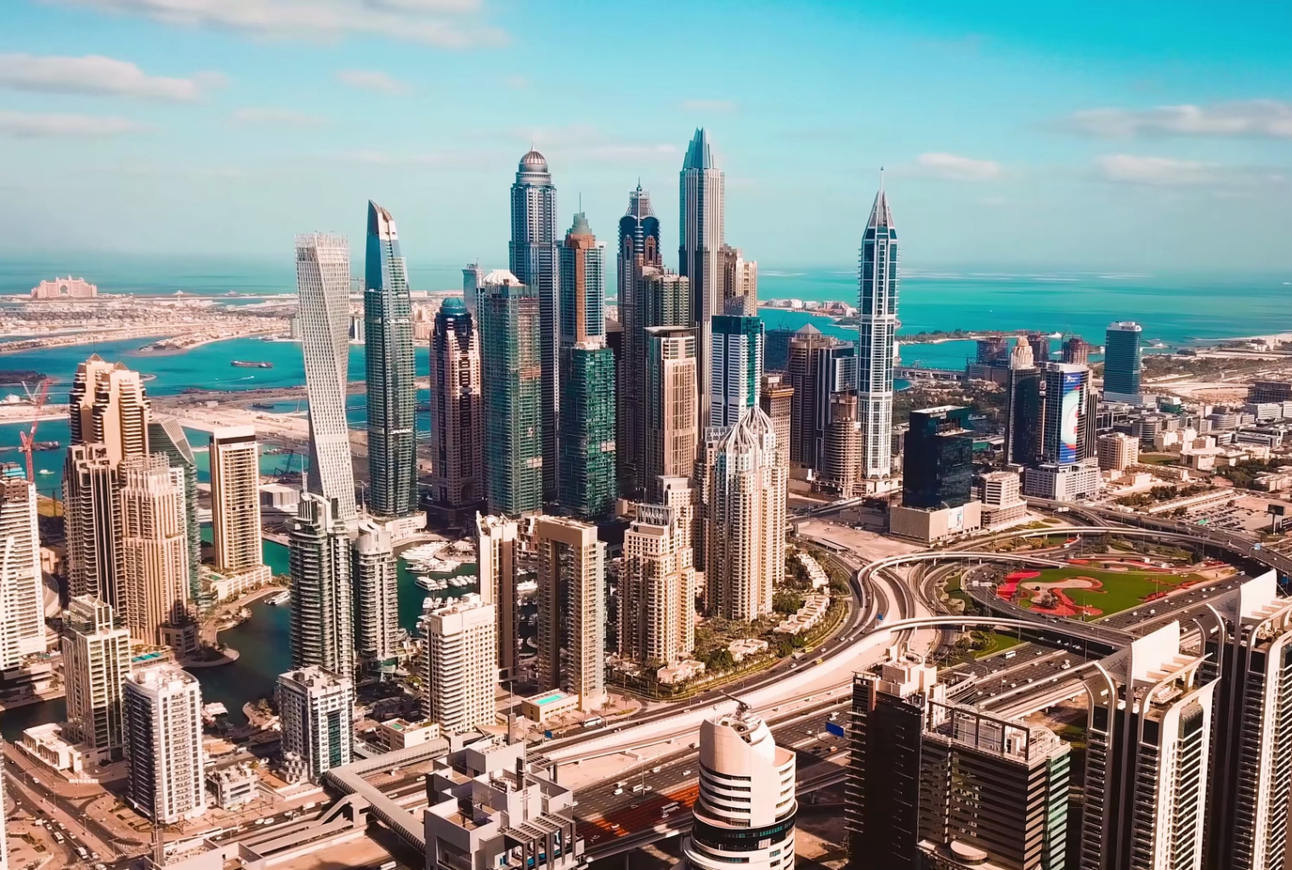
Crypto Valley in Dubai’s Free ZoneDMCC (Dubai Multi Commodities Centre), a Dubai government entity, announced at Davos 2020 on Thursday that it is launching a crypto valley in its free zone, at the heart of the city’s leading business district. DMCC explained that it is “Designed to foster growth, collaboration and integrity across the global blockchain economy,” elaborating:The ‘DMCC Crypto Valley’ will offer a variety of services including incubation for early-stage startups, co-working facilities, innovation services for corporate clients, blockchain and entrepreneurship training, education, events, mentoring and funding.“The launch of the crypto valley in DMCC will enhance the city’s dynamic business environment, and support the wider strategy of the UAE government to attract the innovators, entrepreneurs and pioneers that will shape the future economy,” commented Executive Chairman and CEO Ahmed Bin Sulayem.Established in 2002, DMCC aims to enhance commodity trade flows through the country. Its free zone offers a range of benefits including 0% personal and corporate income tax. Members can also remit all profits made back to their home countries without restriction. In October 2019, DMCC received the Financial Times Fdi magazine’s “Global Free Zone of the Year” award for the fifth consecutive years. A total of 85 global free zones were nominated in the 2019 competition.Situated in the heart of Dubai, DMCC is home to over 100,000 people and 17,000 member companies representing more than 170 countries and 20 business sectors. The companies range from startups to multinational corporations. Every month, 170 more companies join DMCC, 95% of which are new to Dubai, the authority says.


By |2020-01-27T22:31:43+00:00January 27th, 2020|Scoop.it|0 Comments

Bitcoin Gold 51% Attacked – Network Loses $70,000 in Double Spends

Bitcoin Gold Sees Two Deep Blockchain Reorgs With 29 Blocks ReplacedIn May 2018, the Bitcoin Gold (BTG) blockchain was 51% attacked for the first time suffering a loss of more than $18 million. BTG is a fork of the Bitcoin protocol but it doesn’t use the SHA256 consensus algorithm like BTC, BCH, or BSV. The blockchain BTG utilizes a variant of the Equihash algorithm (Equihash 144, 5 or “Zhash”) which can be mined with a GPU. Bitcoin Gold’s creators believed that creating a Bitcoin fork that could be mined with GPUs as opposed to ASIC devices would be more decentralized. However, things went south in the spring of 2018 when a miner gained control of more than 51% of the overall BTG hashrate. After losing $18 million, BTG was also asked to pay the exchange Bittrex back or face being delisted. Since then BTG has been meandering along while other small coins like ethereum classic and vertcoin were 51% attacked too.The Github gist that explains the recent Bitcoin Gold 51% attack on Thursday and Friday. Last week on Thursday and Friday, BTG again dealt with a malicious mining entity as more than 51% of the chain’s hashrate was captured and still is. The blockchain suffered from two deep reorgs on both days that saw $19,000 double spent on Thursday and $53,000 double spent on Friday. For instance, at approximately 1:01 p.m. on Thursday, BTG’s chain saw 14 blocks removed and 13 new blocks added. At 7:24 p.m. on Friday, the blockchain saw 15 blocks removed and 16 blocks added during a small period of time. Most of the blame has been directed at the cloud mining operation Nicehash which has been blamed for most of the 51% attacks in the last two years. Some BTG members believe that there are secret ASICs mining the BTG network and community members are begging for a safer algorithm.“I think it’s time we get a real leader that listens to the members of this community and take action,” one BTG proponent wrote on Reddit. “It is obvious that the first 51% attack was done by ASICs — Why can’t BTG be novel and create a truly new [algorithm]? This coin is a bad investment for anyone looking to buy — None of the devs are qualified.”

By |2020-01-27T22:31:18+00:00January 27th, 2020|Scoop.it|0 Comments

the Israeli government issued a decree Sunday allowing its citizens to visit Saudi Arabia.

In a sign of thawing relations, the Israeli government issued a decree Sunday allowing its citizens to visit the nearby kingdom for 90 days for business or for religious pilgrimages. It's the first time Israel has sanctioned such trips — though crossing the border will still require a reciprocal move from Riyadh. The change comes after President Trump invited Prime Minister Benjamin Netanyahu and his rival, Benny Gantz, to the White House to discuss Trump's long-awaited Mideast peace plan.

By |2020-01-27T22:30:19+00:00January 27th, 2020|Scoop.it|0 Comments

Nouveau plan social pour les hypermarchés Cora : 1.077 emplois bientôt supprimés

Et de trois… D'après la CGT, les hypermarchés Cora sont sur le point d'annoncer, ce vendredi 24 janvier, un troisième plan social en deux ans, portant sur la suppression de 1.077 emplois, après le rejet par une partie des salariés d'avenants à leur contrat de travail dans le cadre d'un pacte social. L'annonce officielle du plan de sauvegarde de l'emploi (PSE) n'a pas encore été faite formellement, mais un accord de méthode a déjà été négocié, a indiqué à l'AFP Julien Aquilina, délégué central CGT chez Cora.Ce nouveau plan fait suite à une longue négociation visant à modifier les postes de travail et à introduire plus de flexibilité et de polyvalence pour les salariés des secteurs de l'épicerie, du non alimentaire et des caisses. Ce pacte social, signé par les syndicats à l'exception de la CGT et de la CFE-CGC, prévoit un avenant au contrat de travail, refusé par 1.077 salariés, qui seraient dès lors l'objet du PSE, selon la CGT. Les syndicats signataires de ce pacte (CFTC, premier syndicat chez Cora, FO et CFDT) ont négocié des avantages, notamment en primes, pour les salariés en échange de changements de définition de leur poste, de davantage de flexibilité horaire et de polyvalence.Cora, qui compte quelque 16.500 salariés, a déjà vu fondre ses effectifs de 8.000 emplois depuis 2009. Le groupe familial, non coté en bourse, compte 61 hypermarchés en France, alors que le segment de "l'hyper" est le plus touché par la crise dans la grande distribution. Dans un communiqué, la CGT met en avant les "20 millions d'euros de CICE ou d'exonération de charges sociales par an" ayant bénéficié à Cora depuis 5 ans et conteste que le groupe ait de "réelles difficultés financières". "Il y a eu une baisse de chiffre d'affaires mais Cora est toujours bénéficiaire et préfère servir ses actionnaires", s'indigne Julien Aquilina.

By |2020-01-27T22:28:55+00:00January 27th, 2020|Scoop.it|0 Comments

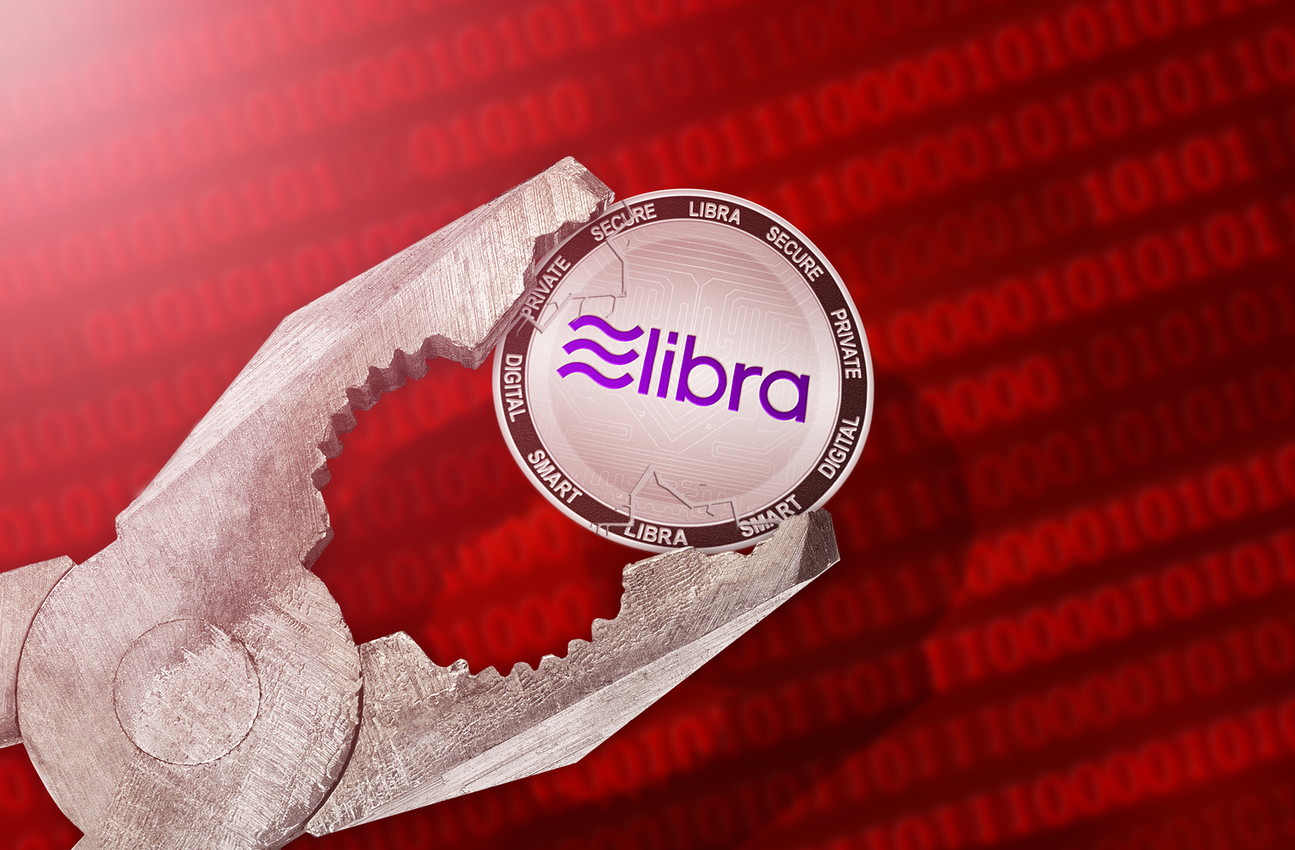
Vodafone Becomes 8th Company to Exit Libra Association

Another Big Name Exits the Libra AssociationThe Libra Association‘s membership continues to shrink as British telecommunications conglomerate Vodafone has become the latest to announce a split from the group. The Libra Association describes its role as working “to evolve and scale the network and reserve” of the planned Libra cryptocurrency.Despite publication of a signed charter in October last year, with Vodafone representation signing on, the group confirmed their departure Tuesday and noted in a statement: “We will continue to monitor the development of the Libra Association and do not rule out the possibility of future co-operation.”The association, which began with 28 founding members, is now down to 20 as Booking Holdings, Ebay, Mastercard, Mercado Pago, Paypal, Stripe, Visa and Vodafone have all exited. Vodafone is making the move to direct resources and attention to M-pesa, its own digital payments service. Some speculate Libra’s ongoing confrontations with government regulators and financial policymakers could also be an influencing factor in the decision.Libra Pushes Forward Despite UncertaintyDante Disparte, the Libra Association’s head of policy and communication said in a statement issued to multiple media outlets:Although the makeup of the Association members may change over time, the design of Libra’s governance and technology ensures the Libra payment system will remain resilient. The Association is continuing the work to achieve a safe, transparent, and consumer-friendly implementation of the Libra payment system.

By |2020-01-27T22:28:33+00:00January 27th, 2020|Scoop.it|0 Comments

La Banque des règlements internationaux crée un groupe de travail sur les cryptomonnaies publiques

La Banque des règlements internationaux (BRI), une organisation financière internationale, a créé un groupe de travail dédié aux monnaies numériques des banques centrales, révèle Reuters le 21 janvier 2020. Le groupe de travail sera copiloté par Benoit Coeuré, ancien membre du directoire de la Banque centrale européenne (BCE), et Jon Cunliffe, gouverneur adjoint de la Banque d'Angleterre.Au total des représentants de la BCE, de la banque centrale de Suède, du Canada, du Japon et la Suisse seront réunis pour évaluer l'utilisation des monnaies numériques des banques centrales tout en étudiant leurs aspects techniques, fonctionnels et réglementaires.  PLUSIEURS PROJETS SOUTENUS PAR LES BANQUES CENTRALESLes projets de cryptomonnaie portés par des banques centrales explosent. Mi-août 2019, on apprenait que la cryptomonnaie nationale chinoise était sur le point d'être prête. Sa date de mise en service demeure toujours floue. Plus récemment, en novembre 2019, c'est la Banque centrale européenne qui réfléchissait à la mise en place d'un tel outil. "La BCE et les autres banques centrales de l'UE pourraient explorer les opportunités et les défis relatifs à l'émission de devises numériques", pouvait-on lire dans la proposition rédigée par la présidence finlandaise de l'Union européenne.La Banque de France a également fait part de son projet de lancer une monnaie numérique grâce un appel à projets début 2020. Il s'agirait d'un euro sous forme numérique dont les mécanismes d'émission pourraient reposer sur des technologies comme la blockchain. Ce projet est soutenu par Bruno Le Maire, ministre de l'Economie, qui a affirmé à plusieurs reprises qu'une monnaie numérique publique pourrait résoudre "certaines difficultés en matière de transaction financière", comme la modulation des coûts de transactions différents en fonction des Etats, en particulier en Europe.UNE ALTERNATIVE À LIBRA ?Ces alternatives ne fleurissent pas par hasard. Le spectre de Libra est la source de motivation principale. Depuis l'annonce de sa création en juin 2019, la cryptomonnaie portée par Facebook défraie la chronique. La multiplication des critiques et de pressions de la part des régulateurs a d'ailleurs poussé une partie de ses membres fondateurs à quitter le projet.Appelé par le Congrès américain à s'exprimer en octobre 2019, Mark Zuckerberg a tenté d'apaiser les tensions. Son argumentation a essentiellement reposé sur la menace chinoise. "Pendant que nous débattons, le reste du monde n'attend pas. La Chine se prépare activement à lancer des idées similaires dans les mois qui viennent", a lancé le patron de Facebook face aux élus américains.

By |2020-01-27T22:26:27+00:00January 27th, 2020|Scoop.it|0 Comments

Germany Rejected Nuclear Power—and Deadly Emissions Spiked | WIRED

Germans have always had a complicated relationship with nuclear power, but the radioactive cloud that swept over Germany following the Chernobyl disaster in the mid-1980s gave new life to the antinuclear policies supported by the country’s Green Party. Following Japan’s Fukushima Daiichi plant meltdown, Germany’s antinuclear lobby kicked into high gear, and tens of thousands of people took to the streets in protest. The German government quickly passed legislation to decommission all of the country’s nuclear reactors, ostensibly to keep its citizens safe by preventing a Fukushima-style disaster. But a study published last month by the nonprofit National Bureau of Economic Research suggests that Germany’s rejection of nuclear power was an expensive and possibly deadly miscalculation.To uncover the hidden costs of denuclearizing Germany, economists used machine learning to analyze reams of data gathered between 2011 and 2017. The researchers, based at UC Berkeley, UC Santa Barbara, and Carnegie Mellon University, found that nuclear power was mostly replaced with power from coal plants, which led to the release of an additional 36 million tons of carbon dioxide per year, or about a 5 percent increase in emissions. More distressingly, the researchers estimated that burning more coal led to local increases in particle pollution and sulfur dioxide and likely killed an additional 1,100 people per year from respiratory or cardiovascular illnesses.Altogether, the researchers calculated that the increased carbon emissions and deaths caused by local air pollution amounted to a social cost of about $12 billion per year. The study found that this dwarfs the cost of keeping nuclear power plants online by billions of dollars, even when the risks of a meltdown and the cost of nuclear waste storage are considered. “People overestimate the risk and damages from a nuclear accident,” says Akshaya Jha, an economist at Carnegie Mellon and an author of the study. “It’s also clear that people don’t realize the cost of local air pollution is pretty severe. It’s a silent killer.”Germany is unlikely to reverse course, but the study’s conclusions provide an important lesson for the United States, where the future of nuclear energy is increasingly uncertain.

By |2020-01-25T22:45:26+00:00January 25th, 2020|Scoop.it|0 Comments

The Rise of Mouth Tech: Oral-B, AI Toothbrushes, Burst Oral Care | WIRED

Mouth tech, particularly in developed markets like the US and Europe, is having a moment. And high-powered toothbrushes are just the tip of the dental pick. Consumer health companies are pitching portable water flossers, dental floss subscriptions, at-home LED whitening kits, and direct-to-consumer smile aligners. The global oral care market is projected to grow to nearly $41 billion by 2025, up from $28 billion in 2017, according to Grand View Research.It’s both a digital phenomena—our collective obsession with self-presentation has driven us to swipe and whiten our smiles before pressing “send”—and one in which the physical goods we buy to clean up our mouths every day are being upgraded with a dose of technology.“Social media and the internet more generally provides a way for us to examine our appearances a little bit more,” says Charlotte Markey, a professor of psychology at Rutgers University who researches body image and eating-related behaviors. The hashtag #teethwhitening brings up a mere 1.7 million results on Instagram, many of them before-and-after photos, while searching Google for the phrase “How to brush your teeth” results in hundreds of thousands of YouTube tutorials.

By |2020-01-25T22:44:56+00:00January 25th, 2020|Scoop.it|0 Comments

Would You Use an Eco-Friendly Credit Card?

An eco-inclined credit card would be another extension of this “consume with consciousness” brand. Another option? Design the card so points automatically fund institutions that drive climate change research.This would be a tough move for a company driven only by their bottom line — some proclivity toward public impact would be required to ensure success. Credit card rewards operate via a shared subsidy: If the credit card company pays $1, the beneficiary company pays the other $1 for every $2 in benefits a customer receives, says Jake Yormak, a partner at Story Ventures, an early-stage venture fund. But with an eco-friendly card, the “green” recipient for whom the benefits are meant to serve wouldn’t be putting up their $1. This means either a greater financial burden would fall on the credit card company, another company would have to subsidize the cause or points would accrue at a slower pace. But the scheme could be profitable if mission-driven branding and marketing appeal are strong enough to draw and convert sufficient new customers, Yormak says.He argues that a card with a carbon footprint calculator, which compiles customers’ spending data, could create more meaningful impact than a points-based model with offsets. There’s demand for comprehensive tracking, but people hesitate to provide data about their spending to third-party apps and platforms, so credit credit companies that already have data are well-positioned, he says.No doubt, there’s something morally incongruous about a quid pro quo where people spend money to appease their conscience. This bartering sounds vaguely reminiscent of purchasing indulgences through the Catholic Church to wipe one’s sins clean to barrel their way to heaven (Martin Luther probably wouldn’t have endorsed this card). One must ask: Do people sin more when they know they’ll have a moral do-over?

By |2020-01-25T22:44:36+00:00January 25th, 2020|Scoop.it|0 Comments

Uber suspend ses clients les plus mal notés

Selon une information diffusée par nos confrères de Libération, le géant américain peut désormais « bloquer » un client de sa plateforme de VTC si celui-ci a une note trop basse. En effet, certains voyageurs l’ont peut être déjà remarqué, les chauffeurs ont la possibilité d’attribuer une note à leur client qui s’affiche en haut à gauche de l’application mobile. Si cette dernière descend à plusieurs reprises un certain seuil, le client recevra dans un premier temps une alerte avant d’être temporairement ou définitivement suspendu. Mis en place en France depuis décembre, ce système avait été testé en Australie et en Amérique du nord. 

By |2020-01-25T14:14:26+00:00January 25th, 2020|Scoop.it|0 Comments