Scoop.it

French Businessman Detained for Stealing €1.2 Million in Crypto From His Partners

Entrepreneur Snatches 182 Bitcoins From His Former CompanyThe investigation was launched on a request from the digital technologies startup, which he helped launch in 2013. It was a pretty successful endeavor for the electronics specialist until a conflict broke out over differences regarding the development strategy. He was eventually fired from his position at the company and decided to leave the country in search for better opportunities.The man’s former partners allege that acting from abroad he managed to steal 182 BTC, or around €1.2 million at the time of writing. According to the Le Parisien newspaper, which covered the story, that’s the third-largest crypto theft in the history of France so far. The misappropriation of funds took place between December 2018 and January this year, Russian media reported.According to the publication, the tech expert knew the company’s electronic system very well and was able to penetrate it without being detected. He also withdrew the money in multiple transactions making sure each one was smaller than the limit that would automatically trigger a security alert. It took the cybercrime unit of the Paris prosecutor’s office several months to identify the wallet the cryptocurrency was transferred to and link it to the suspect.The man was detained on Dec. 22 in the French department of Calvados upon his return to the country. Despite the prosecutors’ request for a permanent arrest, the accused has been released by court authorities and placed only under “strict judicial supervision.”

By |2020-01-01T19:35:36+00:00January 1st, 2020|Scoop.it|0 Comments

Cloud Token and the Rise of MLM Crypto Projects

Mauritius’ Financial Services Commission Warns the Public About Cloud TokenAfter leaving Singapore, the publication behindmlm.com reported that the CTO project leaders retreated to Malaysia and the Republic of Mauritius. “In addition to committing securities fraud in the US, Cloud Token is also not registered to offer securities in Singapore or Malaysia,” behindmlm.com explained in June. The following September, Mauritius’ Financial Services Commission (FSC) issued a statement to the public telling people to beware of CTO:The public is being solicited by a certain group of people on social media under the name of ‘Cloud Token Mauritius’ and ‘Cloud Token Indian Ocean and Africa’ to invest in digital assets and cryptocurrencies through the ‘Cloud Token’ mobile application. It has also come to the attention of the FSC that events are being hosted in publicly accessible areas in Mauritius to promote this application. The FSC urges investors and the public to exercise caution in any dealings with Cloud Token Mauritius and Cloud Token Indian Ocean and Africa.Following the FSC statement, in December news.Bitcoin.com reported on the arrest of 72 CTO associates. Police from Taiyuan, Shanxi province busted the alleged scammers at a train station and investigators disclosed the project defrauded Chinese investors out of 30 million yuan ($4 million).An editorial published by the China-based publication 8btc explains that during its tenure, the CTO project got away with $500 million. An anonymous CTO victim told 8btc that they deposited $20,000 into the wallet. “The crypto scam stole over $500 million from unsuspecting holders, claiming it’s a decentralized wallet that would reward its users for holding coins,” the anonymous person stressed. “Payment was to be received in the form of the company’s utility token and the reward would be 6% to 10% of the invested coin amount. [Meanwhile] the man promising all these rewards vanished with funds from over 800,000 members wondering when and how they will get their initial investment back.”

By |2020-01-01T19:35:13+00:00January 1st, 2020|Scoop.it|0 Comments

How The Dodo Became the Warmest, Fuzziest Corner of the Web | WIRED

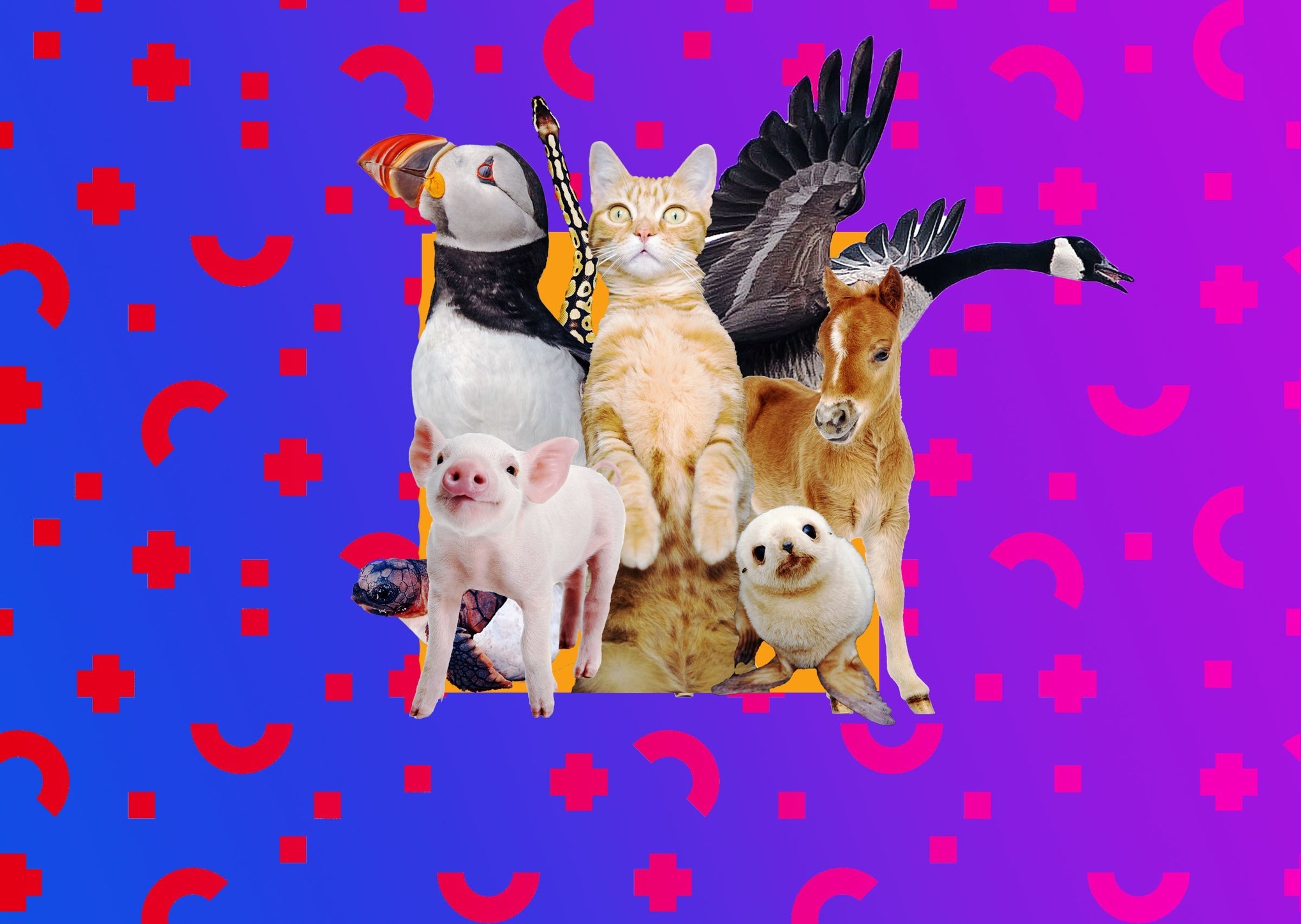
The Dodo racks up around 2.3 billion views each month with heartwarming videos about extraordinary pets (like this super-affectionate python), unlikely interspecies friendships (like this mini horse whose best friend is a goose), and animals in need of adoption by just the right human (like this sick, hairless pupper who became a floofy doggo). They have a separate YouTube channel for kids (Dora the Explorer is a sponsor), a Facebook Watch show about animals overcoming adversity, an Animal Planet show called Dodo Heroes, an IGTV series for teens about influencers and their pets, an upcoming unscripted series for Netflix Kids about an 11-year-old koala activist, and a newly inked children’s book deal with Scholastic. For a company named after a bird that is famously extinct, the Dodo is everywhere.It didn’t exactly come from nowhere. The Dodo’s founder, Izzie Lerer, is the daughter of Ken Lerer, a well-known media executive and cofounder of The Huffington Post. Her brother, Ben, cofounded Thrillist and now runs Group Nine Media, which in 2016 became the Dodo’s parent company. When Lerer was hatching the idea for what the Dodo would become, she was a PhD student at Columbia University, studying philosophy with an emphasis on animal ethics and human-animal relationships. She launched the website in January 2014 (months before she was due to graduate) with the hope of combining entertainment and animal advocacy, Early on, the Dodo found success as a blog, first going viral with an article about a 103-year-old wild orca whale that put the lie to SeaWorld’s claims that their whales, which frequently die in their 20s, were living to a ripe old age. Then, in 2015, the Dodo made its canniest move to date. Noticing the trend away from blogging and toward mobile and visual entertainment, it pivoted to video.

By |2020-01-01T19:18:36+00:00January 1st, 2020|Scoop.it|0 Comments

Bitcoin’s Path From Insurgents’ Talisman to Tool of Big Tech | WIRED

But still the myth endures. The message is that bitcoin, by virtue of its technical underpinnings, is something that sits outside of our world—a tool for people left out of the system. That, at least, was the pitch of the pyramid scheme scammers, who preyed on vulnerable people with the message that shares in a fraudulent bitcoin mining operation would save them when the traditional financial system could not. Many were taken in by that promise.So Bitcoin has strayed a bit from its cypherpunk origins. But not blockchain, right? The underlying platform offers a Platonic form of decentralization, the cryptographic guarantee of trusting no one, of shrugging off central authority. It looked like the perfect antidote to the centralized internet, a weapon of war against Big Tech.This year, Big Tech made its move into blockchain, in what may ultimately look like a hostile takeover. It was convenient, just as our national conversation moved, threateningly, to antitrust and privacy. Earlier this month, Twitter announced it was (maybe) “decentralizing” with (maybe) blockchain, despite long ignoring the cries of people asking it to do just that (with readily available, non-blockchain technology). Critics noted that more private tweeting would help it dodge concerns about content moderation. Facebook has developed a cryptocurrency, Libra, that it claims it doesn’t control, but which will certainly entrench its power. That move helped spark China to accelerate its own push into digital currency, which would become a handy surveillance tool. It’s unclear what role blockchain will play in that effort, but in any case, Xi Jinping is trumpeting public investment in the technology for other purposes.The co-opting of blockchain—its inevitable centralization—should not have come as a surprise. It’s a lesson we’ve learned again and again: We bestow our social values upon technology, not the other way around. We‘ve been through this before. Take the internet. First came the promise that it would unlock knowledge and make us all free—until a dictator cuts the cord and companies track and manipulate our behavior. For blockchain, using words like “decentralization” and “self-sovereignty” doesn’t simply make it so. That takes work: protections for privacy and safety, assurances that networks operate as intended. Like the internet, that doesn’t mean the initial hope and promises were untrue; we were just blind, at first, to alternate interpretations—to manipulations of certain ideals.I could be underselling the influence of blockchain, the subtle nudge at least that technology can be better for users, a reminder of what the early internet promised. For most uses of blockchain at the moment, “decentralization” may be most charitably understood as a collaboration between mistrusting corporate partners. That’s not, I imagine, what Satoshi intended. But perhaps the technology will enable Twitter and Facebook and Goldman Sachs to embrace at least some ideas about openness, the belief in the power of the individual user. How that plays out will be the story to watch in the 2020s.

By |2020-01-01T19:17:53+00:00January 1st, 2020|Scoop.it|0 Comments

This Economist Wants to Change the Meaning of Money

The government, in her eyes, can spend as much as it wants on anything without the bill coming due. Welcome to Modern Monetary Theory — a bizarro world that might not be as far-fetched as it sounds.The quick-witted, passionate professor of economics at Stony Brook University in New York has done more than almost anyone to popularize the theory known as MMT, bursting onto the national scene as Bernie Sanders’ chief economist during the 2016 presidential campaign. Now she’s beating the drum at a time when government shutdown brinkmanship is the norm because of spending fights. With the activist left increasingly driving Democratic politics in the age of Donald Trump, Kelton’s ideas will become increasingly relevant as the midterms heat up and the 2020 presidential race takes shape. And Kelton insists there’s a lot for populist conservatives to love here too.I WORKED REALLY HARD TO PERSUADE [SANDERS] THAT WE SHOULDN’T PLAY INTO THE IDEA THAT THERE’S A DEBT CRISIS. STEPHANIE KELTONThe U.S. has a “fiat money” system, meaning the government creates all money and puts it into circulation. MMT argues the government can never run out of money because it can always create more. If demand ever becomes greater than supply, prices spike, but taxes are used strategically to temper spending and keep inflation in check. Forget balancing the budget and the tax code as we know it. “How do you know you don’t need tax cuts to pay for Medicare-for-all?” Kelton says, only half-joking.That’s where the potential bipartisan appeal comes in. Breitbart News’ John Carney, formerly of CNBC and The Wall Street Journal, has written respectfully of MMT literature — including Kelton’s blog, New Economic Perspectives — as thoughtful sources of “nitty-gritty details” of monetary policy. New York Times conservative columnist Ross Douthat has indicated some sympathy toward aspects of MMT thinking. But at this point, MMT’s foothold lies primarily with the radical liberal crowd. Kelton, 48, grew up a military brat, bouncing among California, Illinois and North Carolina along with her father’s Air Force career. Kelton thought she would be a lawyer or an accountant but developed a keen interest in economics at California State University, Sacramento, where she took History of Economic Thought with professor John Henry, who quickly spotted a star pupil. “She was able to extract the theoretical core of every argument,” Henry says. Later, Kelton worked at the Levy Economics Institute and then the University of Missouri-Kansas City, where she, Henry and several other like-minded economists honed the tenets of MMT. “It takes a while to feel like you can really run with the boys,” Kelton says, but she is much more comfortable as an economist today.Kelton admits that her unconventional ideas occasionally make her feel left out of the larger economic conversation — Stony Brook is a ways from the Ivy League — though it hasn’t slowed her down. After writing several academic papers on the theory, she has made a concerted effort to bring MMT to the mainstream through her blog and social media — including 32,000 Twitter followers. “There wasn’t really MMT before I got involved,” she says proudly.Her association with Sanders only raised its profile, though Kelton says she just nudged the left-wing presidential hopeful and did not directly advise him to embrace MMT. Kelton got on his radar by participating in a Sanders advisory panel on reforming the Fed, then went to work for him on the Senate Budget Committee in 2015 before joining his presidential campaign. “I worked really hard to persuade [Sanders] that we shouldn’t play into the idea that there’s a debt crisis,” Kelton says. While Sanders was keen on government-funded health care and college for all without the budgetary constraints of Hillary Clinton’s plans, he never completely let loose and embraced MMT.The theory draws heated criticism, even among liberals. Progressive economist Thomas Palley believes MMT is a needed antidote to budget hawks, but its theoretical arguments don’t add up. “It would likely promote dangerous asset price inflation and financial instability, which would come back to haunt us,” Palley explains. And if you strip away these flaws, you’re left with standard Keynesian economics, a seasoned school of thought. “MMT adds nothing new to economic theory,” Palley says.

By |2019-12-29T13:31:46+00:00December 29th, 2019|Scoop.it|0 Comments

The Future of Maritime Trade? Unmanned Ships

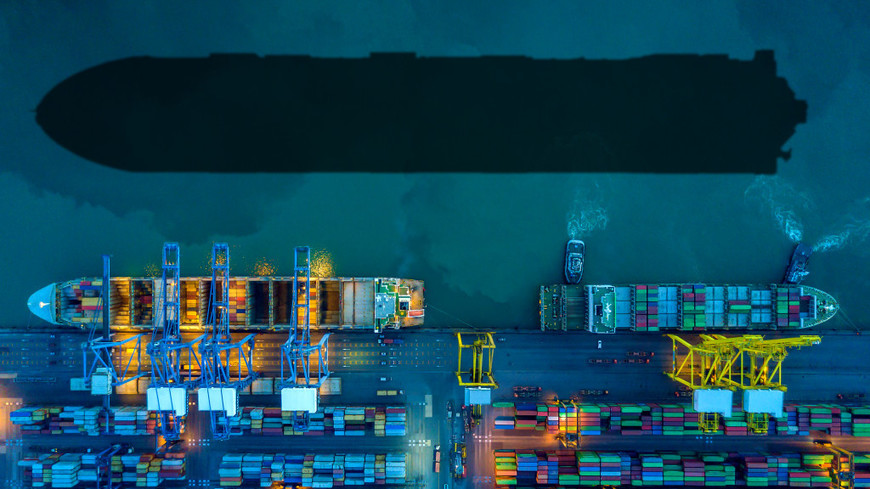
In the Netherlands, a consortium of 20 maritime businesses launched a project in December to study and demonstrate the potential of autonomous maritime transport. In Germany, the Fraunhofer Center for Maritime Logistics and Services is designing a remote-control tugboat that could help large, manned ships dock and undock. And the European Commission is co-sponsoring a collaborative project called MUNIN (Maritime Unmanned Navigation through Intelligence in Networks) that’s developing technology for unmanned vessels.China’s Maritime Safety Administration and Wuhan University of Technology are developing uncrewed multifunctional maritime ships, the country’s latest step in developing advanced transport solutions. And British engineering giant Rolls-Royce plans to build a remotely operated local vessel by 2020. By 2035, the company aims to launch autonomous, unmanned oceangoing ships. These plans are altering the face of shipping, shaped for centuries by sailors and explorers whose actions formed the bedrock of trade and transport. But increasingly, say observers and industry insiders, autonomous, unmanned commercial ships represent an unavoidable future — one where human errors can be avoided, financial margins improved because of fewer wages and lower fuel costs for lighter vessels, and the impact on the environment reduced.“The magnitude of cost-saving potential [when it comes to autonomous and unmanned vessels] is huge,” says Oskar Levander, senior vice president of concepts and innovation at Rolls-Royce Marine.Lives can also be saved with unmanned ships. According to insurance company Allianz, 2,712 people died because of maritime accidents in 2017. In all, 94 ships were lost that year to accidents; 1,129 have been lost over the past decade. “One of the main advantages of unmanned vehicles is that it allows for operations that do not put human lives at risk,” says Richard V. Lawson, CEO of the Washington-based International Ocean Science and Technology Industry Association.

By |2019-12-29T13:31:14+00:00December 29th, 2019|Scoop.it|0 Comments

L’Oréal, une transformation digitale arcboutée sur Alibaba en Chine

Le partenariat entre L’Oréal et Alibaba porte ses fruits en Chine. L’Oréal surfe sur le levier d’audience massif que crée le géant du e-commerce et les facilités technologiques qu’il lui apporte.La vente de produits de beauté sur internet connaît une forte croissance en Chine depuis 2013. Cette hausse moyenne de près de 40% par an bénéficie directement au leader du secteur, L’Oréal.Afin de soutenir le développement de son chiffre d’affaires en Chine, l’entreprise de cosmétiques s’es alliée en particulier à Alibaba, un partenaire digital de référence. Le partenariat entre les deux géants s’avère fructueux.Un pari gagnant dans l’e-commerce en Chine En novembre dernier, L’Oréal était le premier groupe de beauté sur Tmall, le site e-commerce d’Alibaba, lors de la journée de soldes géantes, le Double 11, ou Journée des célibataires, l’événement de ventes en ligne en Chine organisé par Alibaba. Les marques de cosmétiques L’Oréal Paris et Lancôme, du groupe L’Oréal, se sont positionnées respectivement à la première et deuxième place au classement des marques de beauté les plus demandées durant ces soldes.Alibaba met en exergue son partenaire en lui décernant un Grand ONE Business Award, un prix saluant la transformation digitale des entreprises. Le prix a été remis à la filiale chinoise de L’Oréal, le 18 décembre lors d’une cérémonie organisée à Hangzhou.Lire aussi : Comment L’Oréal veut bousculer ses habitudes marketing grâce à la Data« Nous croyons à l’accord parfait entre la beauté et le digital » déclare Fabrice Megarbane, directeur général de L’Oréal Chine, « Cela nous permet de renforcer nos relations avec les consommateurs et de leur fournir de nouveaux services personnalisés, en ligne et hors ligne » ajoute-t-il.«  Nous collaborons étroitement avec des partenaires clés tel qu’Alibaba afin d’avancer ensemble dans la beauty tech et co-créer le futur de la beauté en Chine et partout dans le monde » annonce-t-il. L’Oréal souhaite développer sa démarche dans le domaine du numérique, associée à une approche centrée sur le consommateur en matière de nouveau marketing, de nouveau retail, des données et de l’intelligence artificielle.Le partenariat entre L’Oréal et Alibaba a en particulier mené à la co-création d’une application mobile de diagnostic de l’acné, fondée sur l’intelligence artificielle, et d’un service d’essai de maquillage en 3D sur une mini-app Tmall.L’Oréal et Alibaba ont également collaboré pour créer le premier produit d’innovation inversée consommateur-entreprise dans l’industrie de la beauté, la « Midnight Cream » de L’Oréal Paris. Les consommateurs ont été impliqués dans l’ensemble du processus de développement et de commercialisation du produit.Dans la lignée du programme durable de L’Oréal, Sharing Beauty With All, L’Oréal et Alibaba ont mis en œuvre le Green Parcel Project pour les livraisons de commandes d’e-commerce, fondé sur l’utilisation de matériaux durables pour environ 10 millions de colis verts à destination des consommateurs chinois.

By |2019-12-27T14:50:22+00:00December 27th, 2019|Scoop.it|0 Comments

2019 Google and Yahoo Searches for Bitcoin Decline Significantly

During the bull market of 2017, interest in terms like “bitcoin” and “cryptocurrency” peaked as far as searches are concerned on the Google Trends scale. After December 17, the scale touched 100 for searches for the word “bitcoin” and hasn’t reached that number since. In fact, searches for the term are currently in line with the number of searches in the spring months of 2017.The week of May 7, 2017, Google Trends touched a 10 and today the scale is hovering at approximately nine. Search trends for “bitcoin” also saw a nine on the scale in November 2013 just after the start of that year’s bull market. During the week of May 2019, searches for the word hit a low of seven but started rising back up again during the months. Data shows that in mid-June people looking up the word “bitcoin” jumped to a high of 26.The term “bitcoin” has a higher concentration of queries in countries like Nigeria, South Africa, Ghana, Austria, St. Helena, Netherlands, Slovenia, Singapore, Switzerland, and Australia. Queries closely related this year include “ethereum price,” “Binance,” “IOTA,” and “bitcoin price.” Searches for “bitcoin + news” have a different perspective as interest by region for this subject using Google Trends data over the last five years shows the top countries are Slovenia, Switzerland, Austria, Netherlands, and Cyprus. Queries for the term “bitcoin cash” are the top related topic and the number one related query according to Google’s five-year data, which is followed by “ethereum” and “IOTA.”

By |2019-12-27T14:37:49+00:00December 27th, 2019|Scoop.it|0 Comments

#TOTEC19 : comment Accor se réinvente à l’aube de la ville intelligente

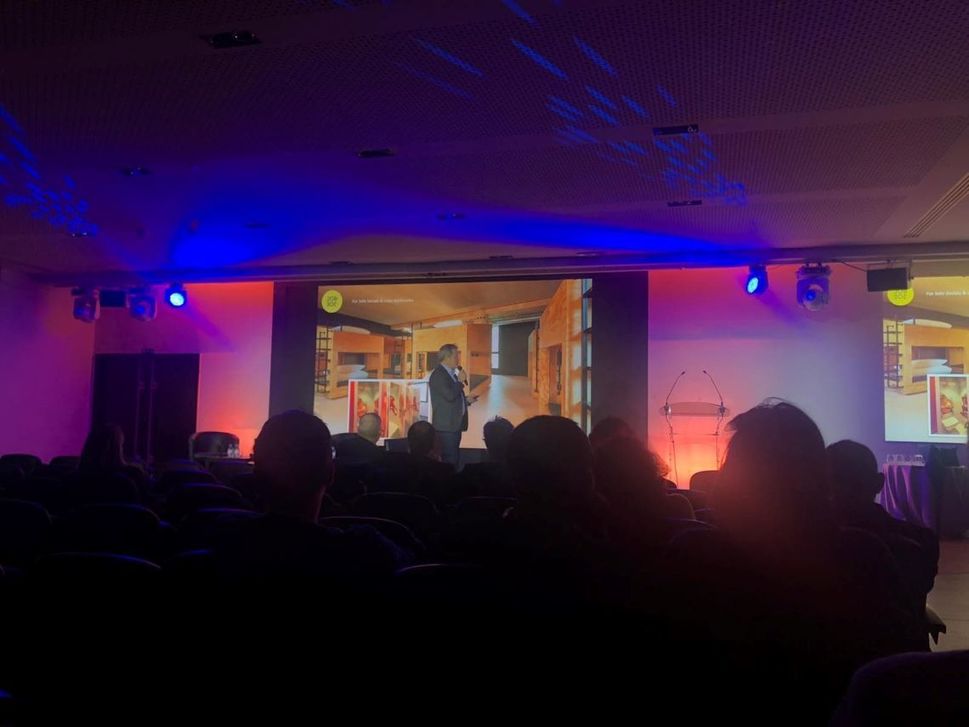
Pour mettre fin au modèle « pas de chambre, pas d’accès à l’hôtel », le groupe a dû se réinventer à l’image de son nouveau programme de fidélisation Accor Live Limitless (ALL) qui illustre la volonté de multiplier les points de contact entre l’hôtel et le client. « Un acteur du MaaS que je ne peux pas citer intègre notamment notre programme », a-t-il confié. Pour lui, deux initiatives menées par le groupe illustrent la place de que doit avoir l’hôtel dans la « ville intelligente » de demain.Le concept « d’open house » Jo & Joe récemment lancé par le groupe illustre sa volonté de dépoussiérer l’hébergement hôtelier en empruntant les codes de l’auberge de jeunesse ou encore d’Airbnb. Un concept « innovant » qui a su attirer une clientèle de 15-35 ans. « Dès le premier mois d’ouverture, l’open house de Paris affichait un taux de remplissage de 98 % », sourit-il. Une première dans l’histoire d’Accor.« Workspitality »Autre concept né au sein du laboratoire d’innovations d’Accor pour accompagner les évolutions comportementales des habitants de la ville de demain : le lancement de l’offre de coworking en partenariat avec Wojo. L’objectif ? Attirer les travailleurs dans les espaces des hôtels inoccupés à certains moments comme la salle de petit-déjeuner par exemple. « L’accès aux Wojo Spots est gratuit pour les travailleurs qui peuvent souscrire à un abonnement mensuel sans engagement pour profiter de remise sur les différents services proposés », a expliqué Frédéric Fontaine. En se positionnant sur le marché de la mobilité dans le travail, le groupe est parvenu à mettre en place un concept transverse à toutes ses marques.« Vous pouvez trouver des espaces Wojo chez Mercure, Ibis, MGallery ou encore Sofitel », indique-t-il. Une offre qui traduit l’enjeu pour les hôteliers de développer d’autres produits et services comme des « retailers » à part entière et surnommée « Workspitality » chez Accor. « Les travailleurs qui se rendent dans nos spots ou corners Wojo peuvent accéder à toute l’offre de l’hôtel comme la salle de sport ou le spa », a-t-il conclut.

By |2019-12-23T23:53:38+00:00December 23rd, 2019|Scoop.it|0 Comments

Laissant Hongkong à son chaos, Pékin récompense Macao – Libération

«Le peuple de la mère patrie et le gouvernement central sont fiers» des résultats de Macao depuis 1999 et de la mise en application du principe «Un pays, deux systèmes», a déclaré Xi Jinping, à son arrivée mercredi. Macao et Hongkong sont les seules régions gouvernées selon cette formule synonyme en théorie d’un «haut degré d’autonomie», de libertés d’expression et d’un système légal plus robuste qu’en Chine continentale.Mais les deux régions administratives spéciales voisines, situées dans l’embouchure de la Rivière des Perles (sud de la Chine), n’ont pas la même lecture du «deux systèmes». Hongkong, revendicative et attachée à son identité, est engagée depuis juin dans un mouvement de défiance à l’égard du régime communiste. Macao apparaît alors conciliante et accommodante, tout entière tournée vers la Chine où sont nés la moitié de ses 667 000 habitants et d’où proviennent plus de 70 % de ses 36 millions de touristes annuels.A Hongkong en 2017, décorations et emblèmes chinois avaient envahi la ville pour les 20 ans de la rétrocession, comme pour forcer l’engouement. Macao, elle, ne s’est parée d’aucun atour particulier, si ce ne sont quelques drapeaux chinois plantés sur des ronds-points. Comme si le retour dans le giron de la Chine était ici un non-événement, tant le territoire est devenu presque plus chinois que la Chine. D’importants dispositifs de sécurité inhabituels dans les gares maritimes de Hongkong et de Macao ont été mis en place, et des militants pro-démocratie hongkongais empêchés de venir à Macao.En vingt ans, l’économie a explosé grâce à l’industrie du jeu et sa fulgurante ascension après la libéralisation du marché en 2002. Malgré la récession et la baisse récente des revenus du secteur, le budget qui vient d’être voté résume l’opulence du territoire de 32,9 km2, troisième PIB par habitant au monde : l’excédent prévu en 2020 est de 22 milliards de patacas (2,4 milliards d’euros). «Le chômage est passé sous la barre des 2 %, les prestations sociales sont importantes et les salaires ont été relevés cinq à six fois en vingt ans, détaille Paul Pun, secrétaire général de Caritas Macao, organisation caritative catholique. Mais le coût de la vie a été multiplié par vingt, la ville ne peut accueillir autant de touristes, et le prix des soins a explosé.»Rares sont les voix à ne pas louer le «succès» de la formule «un pays, deux systèmes». Selon Sonny Lo, politologue installé à Hongkong, «Macao en 2019, c’est Hongkong au début des années 90, à l’époque où la vie politique et la société civile étaient embryonnaires». L’entrée en vigueur il y a dix ans d’une loi sur la sécurité nationale explique la bonne tenue de Macao. Les dernières manifestations d’ampleur remontent à 2014 (20 000 personnes contre un projet de parachute doré) et à 1989 (100 000 en réaction au massacre de Tiananmen).

By |2019-12-23T23:10:59+00:00December 23rd, 2019|Scoop.it|0 Comments