Scoop.it

Walmart’s e-commerce business on track to lose over $1 billion

Walmart’s attempt to catch up with Amazon comes at a huge cost — and it’s stirring up hard feelings within the company.While Walmart has been making investments — like buying Jet.com for $3.3 billion — to try to compete with Jeff Bezos’ behemoth, it’s been a drag on the big-box business’ profitability. So much so that Walmart is now projecting losses of over $1 billion for its U.S. e-commerce division, helmed by Marc Lore, this year, on sales of between $21 billion and $22 billion, according to a report by Vox, citing discussions with multiple sources familiar with those financials.Walmart didn’t immediately respond to CNBC’s request for comment on this story.Frustration has been growing within Walmart as these losses on Lore’s team mount, the report said. And now the company is reportedly pressuring Lore’s team to sell off some of the digitally native brands it’s acquired in an attempt to amass more inventory and gain the expertise of younger, e-commerce leaders. Citing discussions with people familiar, Vox said Walmart has discussed in recent months selling menswear brand Bonobos and women’s clothing retailer Modcloth.Walmart will reportedly likely sell ModCloth this year, for less than its purchase price. It reportedly still plans to hang onto Bonobos.Vox reported Bonobos, Modcloth and plus-sized fashion brand Eloquii — which it bought last year — are still unprofitable.And the report said Walmart won’t make any more acquisitions of digitally native brands for at least the next year, citing three sources, “barring an incredible acquisition opportunity that is just too good to pass up.” Instead, it said the retailer will lean more into incubating its own brands, like it did in creating mattress brand Allswell.Walmart had previously said it anticipated losses stemming from its e-commerce operations would increase in 2019.The company also recently announced a major overhaul at Jet, taking steps to more fully integrate the e-commerce platform into its own business. As part of the changes, Jet president Simon Belsham is expected to leave the company in August, with that role dissolving entirely.Meanwhile, tensions have reportedly been rising between Lore and the CEO of Walmart U.S., Greg Foran, who runs the retailer’s bricks-and-mortar stores.Foran would like for Walmart to put more resources toward cutting prices of items, not building digital brands, Vox reported. The report said Foran is also increasingly frustrated that Lore is getting credit for growing Walmart’s online grocery business, which is really more reliant on stores.This all calls into question just how much longer Lore will be at Walmart.


By |2019-07-15T14:15:41+00:00July 15th, 2019|Scoop.it|0 Comments

The Cryptocurrency Rush Transforming Old Swiss Gold Mines

THE SMALL VILLAGE of Gondo, high in the Alps on the Simplon Pass between Switzerland and Italy, traces its origins to the 17th-century gold mines of Kaspar Stockalper. It was a boom town, but when the mines closed in the late 1800s, the town went into a long decline; today it has around 50 full-time residents. But a few years ago Gondo began to attract a new kind of prospector—cryptocurrency miners attracted by the mountain town's cool temperatures and cheap hydroelectric power.The first miners to arrive were a group of young Swiss businessmen whose company, Alpine Tech, built a window­less bunker fitted out with 900 graphics cards (GPUs) to "mine" cryptocurrencies including bitcoin and ethereum. These and other digital currencies require massive computational power to verify blockchain transactions, so they reward people who provide that power with newly minted coins. Although still based in Gondo, Alpine Tech now operates mining facilities across Europe.Last year, Italian photographer Claudio Cerasoli made a series of visits to Gondo to document Alpine Tech's operations, as well as the remnants of the town's old gold mines. "From the beginning, I was fascinated by the similar terminology used in cryptocurrency and gold mining," Cerasoli says. "In both cases, despite the sophisticated technologies involved, there are small-scale, artisanal tech­niques to discover."The Alpine Tech team invited Cerasoli to photograph the racks of graphics cards in their underground concrete bunker, which is cooled by a dozen plastic tubes that pump 30,000 cubic meters of chilled air into the space every hour. Mining cryptocurrency is extremely energy intensive; an online tool built by University of Cambridge researchers estimates that the annual worldwide energy consumption of bitcoin alone equals that of Switzerland—the country that, coincidentally, has become something of a cryptocurrency hotbed.For his series The Gold of Gondo, Cerasoli juxtaposes photographs of blockchain computing with images of abandoned gold mines, prompting viewers to wonder what, in a hundred years, will remain of Alpine Tech's bitcoin boom. "Both gold miners in the past and these modern miners are motivated by the desire to discover a new world," Cerasoli says. "And they both had to create innovative ways to achieve their purpose."For now, at least, the cryptocurrency gold rush is on.

By |2019-07-15T13:55:32+00:00July 15th, 2019|Scoop.it|0 Comments

The Cryptocurrency Rush Transforming Old Swiss Gold Mines

THE SMALL VILLAGE of Gondo, high in the Alps on the Simplon Pass between Switzerland and Italy, traces its origins to the 17th-century gold mines of Kaspar Stockalper. It was a boom town, but when the mines closed in the late 1800s, the town went into a long decline; today it has around 50 full-time residents. But a few years ago Gondo began to attract a new kind of prospector—cryptocurrency miners attracted by the mountain town's cool temperatures and cheap hydroelectric power.The first miners to arrive were a group of young Swiss businessmen whose company, Alpine Tech, built a window­less bunker fitted out with 900 graphics cards (GPUs) to "mine" cryptocurrencies including bitcoin and ethereum. These and other digital currencies require massive computational power to verify blockchain transactions, so they reward people who provide that power with newly minted coins. Although still based in Gondo, Alpine Tech now operates mining facilities across Europe.Last year, Italian photographer Claudio Cerasoli made a series of visits to Gondo to document Alpine Tech's operations, as well as the remnants of the town's old gold mines. "From the beginning, I was fascinated by the similar terminology used in cryptocurrency and gold mining," Cerasoli says. "In both cases, despite the sophisticated technologies involved, there are small-scale, artisanal tech­niques to discover."The Alpine Tech team invited Cerasoli to photograph the racks of graphics cards in their underground concrete bunker, which is cooled by a dozen plastic tubes that pump 30,000 cubic meters of chilled air into the space every hour. Mining cryptocurrency is extremely energy intensive; an online tool built by University of Cambridge researchers estimates that the annual worldwide energy consumption of bitcoin alone equals that of Switzerland—the country that, coincidentally, has become something of a cryptocurrency hotbed.For his series The Gold of Gondo, Cerasoli juxtaposes photographs of blockchain computing with images of abandoned gold mines, prompting viewers to wonder what, in a hundred years, will remain of Alpine Tech's bitcoin boom. "Both gold miners in the past and these modern miners are motivated by the desire to discover a new world," Cerasoli says. "And they both had to create innovative ways to achieve their purpose."For now, at least, the cryptocurrency gold rush is on.

By |2019-07-15T13:50:35+00:00July 15th, 2019|Scoop.it|0 Comments

Who’s Listening When You Talk to Your Google Assistant?

Tim Verheyden, a journalist with Belgian public broadcaster VRT, contacted the couple bearing a mysterious audio file. To their surprise, they clearly heard the voices of their son and baby grandchild—as captured by Google’s virtual assistant on a smartphone.Verheyden says he gained access to the file and more than 1,000 others from a Google contractor who is part of a worldwide workforce paid to review some audio captured by the assistant from devices including smart speakers, phones, and security cameras. One recording contained the couple’s address and other information suggesting they are grandparents.Most recordings reviewed by VRT, including the one referencing the Waasmunster couple, were intended; users asked for weather information or pornographic videos, for example. WIRED reviewed transcripts of the files shared by VRT, which published a report on its findings Wednesday. In roughly 150 of the recordings, the broadcaster says the assistant appears to have activated incorrectly after mishearing its wake word.Some of those captured fragments of phone calls and private conversations. They include announcements that someone needed the bathroom and what appeared to be discussions on personal topics, including a child’s growth rate, how a wound was healing, and someone’s love life.Google says it transcribes a fraction of audio from the assistant to improve its automated voice-processing technology. Yet the sensitive data in the recordings and instances of Google’s algorithms listening in unbidden make some people—including the worker who shared audio with VRT and some privacy experts—uncomfortable. Privacy scholars say Google’s practices may breach the European Union privacy rules known as GDPR introduced last year, which provide special protections for sensitive data such as medical information and require transparency about how personal data is collected and processed.

By |2019-07-15T13:48:21+00:00July 15th, 2019|Scoop.it|0 Comments

Tesla affiche un nombre record de livraisons au deuxième trimestre

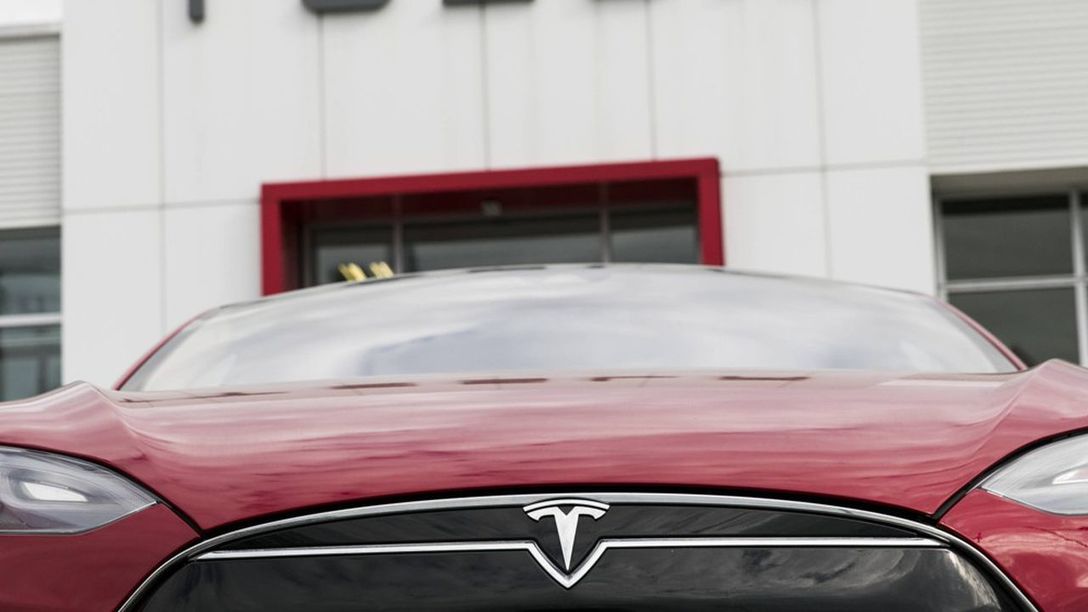
Elon Musk l'avait laissé entendre  la semaine dernière dans une note adressée à ses salariés . Cette fois, c'est officiel. Tesla a livré un nombre record de voitures au deuxième trimestre. Selon les chiffres publiés mardi soir, les livraisons ont atteint 95.200 véhicules, bien plus que les 91.000 véhicules attendus par les analystes. De quoi également faire oublier  la déconvenue du premier trimestre , lorsque les livraisons avaient chuté de 31 % - pénalisées notamment par des engorgements logistiques.Les  Model 3 ont représenté 81 % des livraisons, soit 77.550 unités. Sur la même période, les ventes des Model X et Model S ont atteint 17.560, indique le constructeur qui ne différencie plus les deux types de véhicules. C'est 45 % de plus qu'au trimestre précédent, mais toujours moins qu'au quatrième trimestre 2018 (plus de 27.000 livraisons) : une chute qui ravive les craintes des analystes, d'une cannibalisation de ces modèles plus lucratifs pour le constructeur.Musk confiant pour le troisième trimestreTesla qui, a produit un peu plus de 87.000 véhicules sur la période (dont plus de 72.000 Model 3), ne donne pas de détails sur la répartition géographique de ses livraisons - sinon que l'essentiel de ses ventes se fait toujours aux Etats-Unis. Une petite satisfaction sans doute pour Elon Musk puisque, depuis le début de l'année, les ventes des constructeurs traditionnels que sont General Motors, Fiat Chrysler, Toyota ou bien encore Nissan ou Honda, ont vu leurs ventes reculer.

By |2019-07-10T16:33:29+00:00July 10th, 2019|Scoop.it|0 Comments

Un premier train piloté à distance pour la SNCF

En septembre 2018, la SNCF annonçait vouloir faire rouler des trains autonomes d’ici 2023. Un projet porté par deux consortiums, l’un pour le fret, l’autre pour le transport de voyageurs. Mais avant d’y parvenir, l’opérateur ferroviaire déclarait vouloir mettre un prototype de train autonome, ou plutôt téléconduit, sur les rails. C’est désormais chose faite. L’essai a été mené sur 4 kilomètres entre Villeneuve-Saint-Georges et Juvisy-sur-Orge, en région parisienne, avec un site de pilotage situé non loin de là, à Vigneux-sur-Seine. « C’est une grande première pour le système ferroviaire. Cette expérimentation réussie est une étape fondamentale dans la réalisation du train de demain : un train plus régulier, plus ponctuel, qui accueille plus de personnes et transporte plus de marchandises. Pour un groupe qui fait circuler 17 000 trains et 4 millions de voyageurs par jour, c’est un enjeu majeur », commente Luc Laroche, Directeur du projet Train Autonome chez SNCF.Trois bénéficesCette expérimentation est le fruit de 18 mois de recherches et d’essais menés par la SNCF aux côtés de différents partenaires (Thales, IRT Railenium, Actia Telecom, CNES). Pour permettre au pilote de guider le train à distance, l’expérimentation combinait transmission satellitaire et réseau cellulaire privé équivalent à la 4G. « La SNCF travaille sur le système ferroviaire de demain. Le Spatial est une composante de cette transformation et nous sommes totalement engagés à leurs côtés dans ce challenge technologique et opérationnel », indique Gilles Rabin, Directeur de l’Innovation, des Applications et de la Science du CNES.Une capacité d’opération accrue, une hausse de la fluidité et de la régularité ainsi qu’une diminution de la consommation énergétique, voici les bénéfices associés à l’automatisation des trains. Pour autant, l’initiative ne fait pas l’unanimité auprès des internautes à en juger par le contenu des commentaires de la vidéo Youtube.

By |2019-07-10T16:33:06+00:00July 10th, 2019|Scoop.it|0 Comments

Africa’s Interest in Bitcoin Remains High as 15 States Plan to Adopt the ‘Eco’ Currency

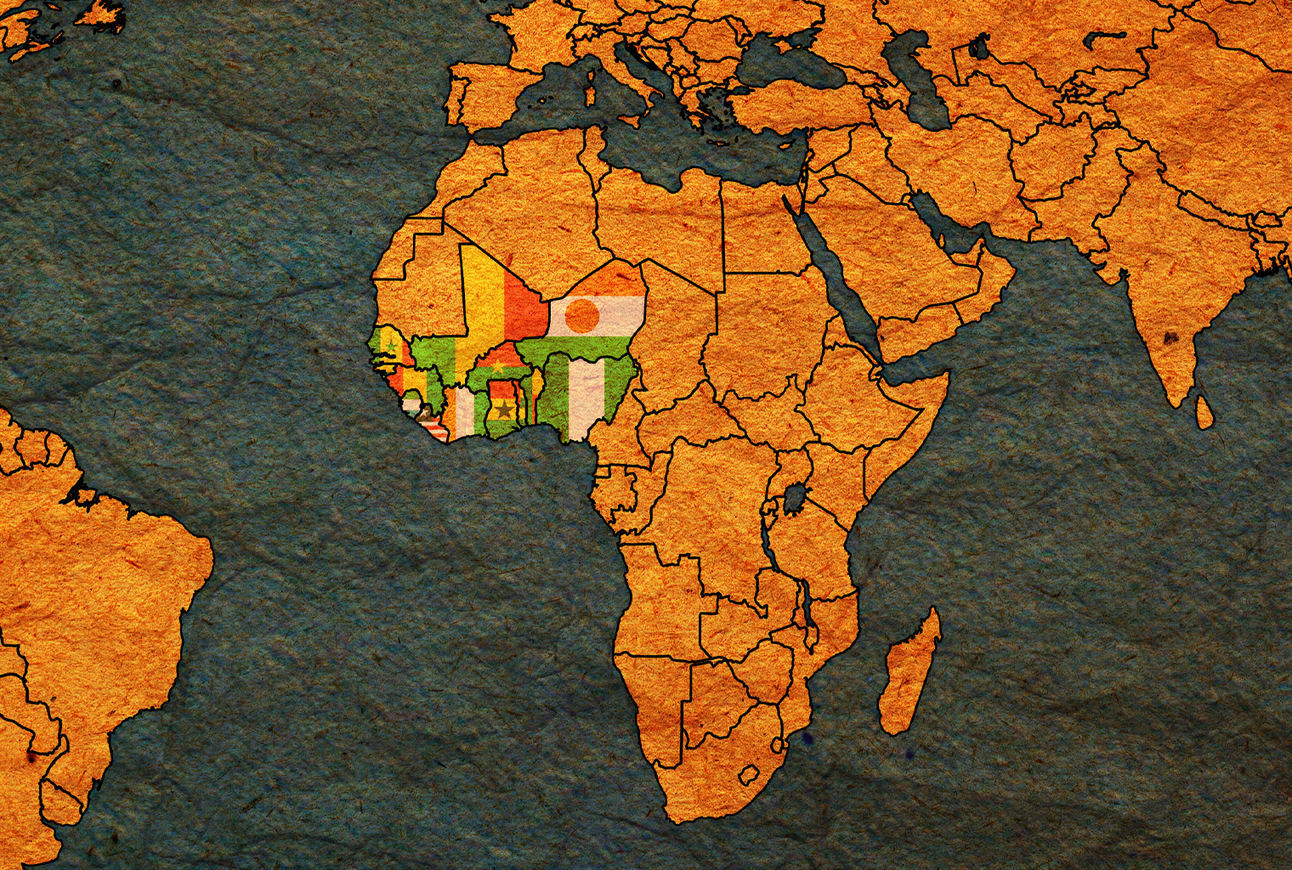
15 West African Countries Plan to Introduce the Eco in 2020Right now a number of countries within the great continent of Africa are facing economic uncertainty and have issues with their sovereign issued currencies. This can be seen in regions that are suffering from hyperinflation like South Sudan and Zimbabwe but also in countries dealing with wavering monetary unpredictability. Some nations are having troubles with their sovereign issued tender and citizens tend to use multiple currencies like the CFA franc, euro or U.S. dollar for trade. On Saturday, the 15 member-country regional bloc called the Economic Community for West African States (ECOWAS) agreed to issue a new fiat currency called the eco. The single currency has been discussed for a number of years and was supposed to be launched in 2000.There are currently 15 member countries in the Economic Community of West African States: Benin, Burkina Faso, Cabo Verde, Côte d’Ivoire, The Gambia, Ghana, Guinea, Guinea Bissau, Liberia, Mali, Niger, Nigeria, Senegal, Sierra Leone, and Togo.Local media reports “a real firm political will” for the member countries to adopt a single monetary unit this time around. Some of the West African States use the CFA franc and six of the member countries, including Nigeria, Liberia, and Ghana, have been having multiple currency issues for quite some time. The ECOWAS leaders will collaborate with the West African Monetary Agency (WAMA) and the region’s central banks in order to speed things up for 2020 adoption. Eco is not going to be a digital currency nor will it use blockchain technology and the new fiat reserve aims to bolster cross border trade.“The single currency if properly implemented will improve trade by allowing specific countries to specialize at what they are good at, and exchange it for other goods that other countries in the bloc produce more efficiently,” economic analyst,Tokunbo Afikuyomi told the press on Monday.

By |2019-07-10T16:18:26+00:00July 10th, 2019|Scoop.it|0 Comments

Des douaniers chinois installent une appli de surveillance sur le smartphone des touristes – Libération

En Chine, la surveillance généralisée ne concerne plus seulement les citoyens. Les voyageurs et commerçants s’aventurant depuis le Kirghizistan dans le Xinjiang – où la minorité musulmane ouïghoure est sévèrement réprimée – au nord-ouest du pays, font l’objet d’un contrôle particulièrement intrusif à la frontière. Comme le révèle une enquête menée par plusieurs médias, dont le New York Times et le Guardian, ils sont nombreux à s’être vu confisquer leur téléphone portable par les douaniers sans plus d’explications. Sur les appareils Android, les gabelous chinois installent une application dénommée Fengcai (qui évoque des abeilles collectant du pollen). Dotée d’un logiciel espion, celle-ci scanne les données de l’appareil – calendrier, textos, répertoire de contacts… – qui sont ensuite stockées sur un serveur distant. Les iPhone, quant à eux, sont connectés via un câble USB à un appareil portatif dont le fonctionnement n’a pas été éclairci par les journalistes.Le système vérifie également si les touristes ne sont pas en possession de l’un des 73 000 fichiers (images, vidéos, sons, documents) interdits qu’elle répertorie. Parmi eux : des instructions pour fabriquer des armes ou faire dérailler un train, des publications de l’Etat islamique, mais aussi des pages d’un dictionnaire arabe, des citations du Coran, des photos du dalaï-lama (que la Chine considère comme un dangereux séparatiste), et même une chanson d’un groupe japonais de heavy metal, Unholy Grace, dont l’un des titres est baptisé Taiwan : Another China. Le code de l’application indique que celle-ci reste sur le portable après installation, mais qu’elle cesse de le scanner. Les journalistes, toutefois, n’ont pas pu déterminer si des voyageurs avaient été détenus ou surveillés de près en raison d’informations trouvées sur leur téléphone.

By |2019-07-10T16:17:06+00:00July 10th, 2019|Scoop.it|0 Comments

Cent ans après, Danone se refait une jeunesse

Danone a 100 ans. Un bel âge, mais suffisamment avancé pour être amené à se réinventer. Car le consommateur change, il est de plus en plus « flexitarien ». Comprenez qu'il veut moins de produits animaux, plus de végétal et plus de bio. Pour lui répondre, le groupe laitier s'est fendu d'un rachat important, celui de WhiteWave, géant américain du lait bio et végétal, s'ouvrant un marché important outre-Atlantique.La commémoration du centenaire, à Barcelone, là où tout avait commencé sous la houlette du fondateur Daniel Carasso, a aussi été l'occasion pour Emmanuel Faber, le successeur de Franck Riboud, de faire une annonce fracassante. Danone met à disposition de la recherche mondiale 1.800 ferments qui ont servi à formuler ses yaourts.Un véritable trésor de guerre, que le groupe donne en partage et dont les applications dépassent l'alimentaire avec, notamment, la fertilisation des terres. L'initiative est, de surcroît, positive pour son image à une ère où le profil de ses consommateurs évolue vers une plus grande conscience du durable et de la santé.

By |2019-07-10T16:15:12+00:00July 10th, 2019|Scoop.it|0 Comments

+78 milliards en 2019 : les milliardaires qui s’enrichissent le plus sont… les Français

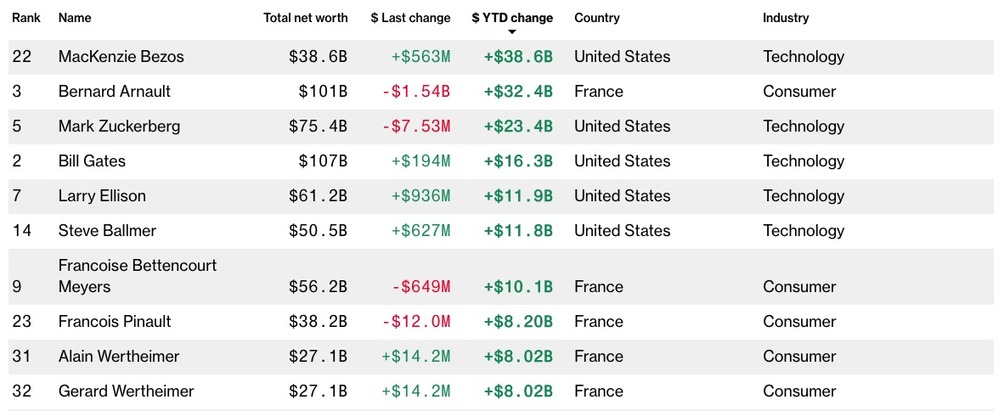
En France, tout va décidément pour le mieux… pour les riches ! Comme l'a relevé le journal économique Bloomberg lundi 1er juillet, les 14 milliardaires français parmi les 500 plus riches de la planète se sont enrichis de 78 milliards de dollars – net – au premier semestre 2019, avec un taux de croissance de 34,6 % : une vitesse d'enrichissement record parmi les pays comptant plus de deux milliardaires.Pendant que les gilets jaunes occupaient les ronds-points, les ultra-riches français ont donc amassé des richesses à un rythme deux fois plus soutenu que celui de leurs homologues chinois (17 %) et américains (15 %). Les milliardaires français devancent ceux de Thaïlande (+32,7%), de Singapour (30 %) et du Japon (24 %).Parmi ce 1% des 1%, ce sont encore les trois premières fortunes françaises dont le portefeuille a le plus épaissi, selon l'index de Bloomberg : portés par une forte demande de biens de luxe en Chine, Bernard Arnault (LVMH, 3ème fortune mondiale), Françoise Bettencourt Meyers (L'Oréal, 9ème fortune mondiale) et François Pinault (Kering, 23ème fortune mondiale) ont engrangé à eux seuls 53 milliards de dollars depuis le 1er janvier.CINQ FRANÇAIS DANS LE TOP DIXLes plus grosses fortunes hexagonales affichent une santé insolente : parmi les dix milliardaires ayant gagné le plus depuis le début de l'année, cinq sont français. Figurent dans ce quintette, outre les trois Crésus déjà cités, les frères Alain et Gérard Wertheimer (31ème et 32ème fortunes mondiales), à la tête du groupe Chanel.

By |2019-07-10T16:13:49+00:00July 10th, 2019|Scoop.it|0 Comments